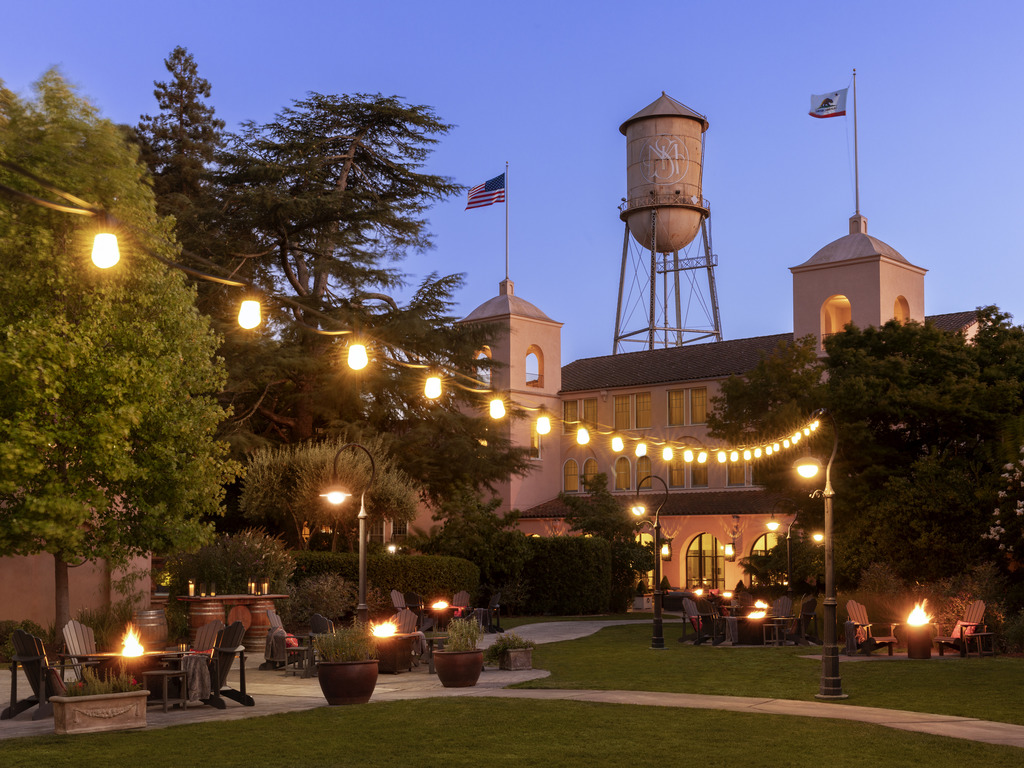
Destination San Diego - United States of America

Your next destination

California : book your hotel

Book a hotel from Accor's 45+ hotels Brands

California : browse hotels

ALL LOYALTY PROGRAMME

Most awarded programme by travellers*

  • Book at the best price
  • 100+ ways to earn and use points
  • Elevate your stay with high-value perks
  • 2000+ exclusive global events

California : practical information

California

Choosing among hotels in California starts with deciding what kind of trip makes sense: Los Angeles and San Francisco work well for urban breaks, San Diego combines city attractions with the coast, Palm Springs offers a desert escape, and Napa Valley brings vineyards and culinary experiences into the itinerary, while Central Coast destinations such as Monterey, Santa Barbara, Santa Cruz, Pismo Beach and San Luis Obispo can become stops on a longer road trip. Because distances are significant, a California itinerary benefits from a regional approach rather than trying to see everything at once, combining destinations that naturally fit together. The variety of hotels in California reflects these different ways of experiencing the state: a central city hotel can provide easy access to restaurants and cultural attractions, a coastal property can become part of a beach-focused itinerary, and a resort can offer a slower-paced alternative between days of sightseeing, while for road trips, practical details such as parking and access to the next route can be just as relevant as the facilities at the property itself. California's scale also makes the order of a trip important: San Francisco and the Central Coast naturally fit into some itineraries, while Los Angeles, Anaheim, Santa Monica and San Diego create another cluster in Southern California, and building the journey around these regional connections can leave more time for the destinations themselves.

Why California belongs on your travel list

California's variety is one of its defining features: a single trip might combine contemporary art and dining in Los Angeles, coastal scenery around Santa Monica, vineyards in Napa or the granite landscapes of Yosemite. Each major city offers something distinct — San Francisco for its hills and waterfront, Los Angeles for its scale and entertainment, San Diego for a relaxed coastal setting, and Sacramento as the state capital — while smaller destinations like La Jolla, Beverly Hills, Monterey and Santa Barbara add their own character to a trip. Because of this variety, there is no single ideal base for every California trip: comparing hotels in California by region and by the experiences planned nearby is more useful than treating the state as one destination, since a city break, a beach vacation and a road trip call for very different accommodation. Nature adds further contrast, from the Pacific coastline to the Sierra Nevada's mountains and national parks and the desert around Palm Springs and Joshua Tree, which is why California suits travelers who want variety within a single trip and hotels that can adapt to each stage of the journey.

When is the best time to visit California?

California can be visited throughout the year, but conditions vary significantly between the coast, desert and mountains, so the right season depends less on the state as a whole than on the regions included in the itinerary. Coastal weather deserves particular attention, since San Francisco can remain cool even during summer while Southern California generally offers warmer conditions, and mountain weather follows a different pattern again, with snow affecting access to some roads and trails in winter. Season can also influence the type of accommodation that makes the most sense: during warmer months, coastal hotels in California can complement itineraries centered on beaches and outdoor activities, while winter trips may shift attention toward city hotels, desert resorts or mountain destinations depending on whether the priority is culture, sunshine or snow. Travel dates can matter just as much as season, since major events, school holidays and popular weekends may affect availability in individual destinations, so comparing the same dates across suitable areas gives a clearer picture than assuming one season will always offer the same experience statewide.

  • Spring: wildflowers, comfortable temperatures in many regions and strong waterfall flows in parts of the Sierra Nevada.
  • Summer: beach trips, mountain trails and long days, although inland and desert destinations can become very hot.
  • Fall: harvest season in wine country and generally pleasant conditions for combining cities with the coast.
  • Winter: snow sports in the Sierra Nevada and milder conditions in desert destinations such as Palm Springs.

California's regions at a glance

Breaking California into regions makes planning easier, particularly when accommodation and transportation are considered together.

  • Southern California: Los Angeles, Beverly Hills, Santa Monica, Anaheim, San Diego and La Jolla combine major attractions with beaches, entertainment and urban experiences. Searches for hotels in Los Angeles, Beverly Hills hotels, Santa Monica hotels, Anaheim hotels and San Diego hotels reflect how many different bases are possible within this part of the state.
  • The Central Coast: Santa Barbara, Pismo Beach, San Luis Obispo, Monterey and Santa Cruz can form part of a Pacific Coast Highway itinerary, suiting travelers who want to break the drive into several destinations rather than rush between California's largest cities.
  • The San Francisco Bay Area: San Francisco is a natural base for city sightseeing, while San Jose provides access to another side of the Bay Area; location matters when comparing hotels in San Francisco, CA and San Jose hotels because the region covers a considerable area.
  • Wine Country: Napa and Sonoma: vineyards, restaurants and tasting experiences shape trips north of San Francisco, and Napa hotels work particularly well when wine country itself is the focus rather than a short excursion from the city.
  • The Sierra Nevada: Yosemite and Lake Tahoe shift the focus toward mountains and outdoor experiences; travelers looking at hotels in South Lake Tahoe should consider seasonal conditions as well as proximity to planned activities.
  • The desert: Palm Springs and Joshua Tree: desert landscapes, modernist architecture and resort-style stays make this region a contrast to the coast, and Palm Springs hotels can provide a comfortable base for exploring the Coachella Valley.
  • Catalina Island: reached from the mainland rather than as a conventional road-trip stop, the island calls for different transportation planning, and travelers comparing Catalina Island hotels should factor ferry schedules into the itinerary.
  • Sacramento: the state capital offers a different atmosphere from San Francisco and the coastal destinations, with museums, historic areas and a strong connection to California's political and agricultural history, making Sacramento hotels sensible for routes through inland Northern California.

Classic California road trips

California's size makes road travel part of the experience, but the most enjoyable itineraries usually focus on a manageable section rather than attempting to cover the entire state.

  • Pacific Coast Highway from San Francisco to Los Angeles: this classic route can connect San Francisco with Monterey, the Central Coast, Santa Barbara and Los Angeles, with smaller coastal stops along the way.
  • Los Angeles to Palm Springs and Joshua Tree: the route exchanges the Pacific coast and urban attractions for desert landscapes, making it possible to combine two very different sides of Southern California.
  • San Francisco to Yosemite and Lake Tahoe: this itinerary moves inland toward mountain scenery and national parks, with driving conditions and road access becoming particularly important in colder months.
  • Southern California combinations: Los Angeles, Santa Monica, Beverly Hills and Anaheim can be part of the same broader trip, although traffic and travel times should be considered; travelers comparing hotels near Universal Studios California may find a Los Angeles base more practical than staying near the coast when the theme park is a priority.
  • Pacing the coastal route: overnight stops can create time for places such as Monterey, San Luis Obispo, Pismo Beach and Santa Barbara instead of treating San Francisco and Los Angeles as the only destinations, with the number of stops depending on the overall length of the trip.
  • Location and parking: a property near the next day's route can simplify departure, while a hotel in a walkable central area may allow the car to remain parked once the day's driving is finished — and longer trips do not necessarily need to include every major destination, since a route centered only on Southern California or the Central Coast can be more relaxed than connecting San Diego, Los Angeles, San Francisco, Yosemite and Lake Tahoe in one short itinerary.

National parks worth planning your trip around

California's national parks are destinations in their own right, and some require more planning than their position on a map might suggest.

  • Yosemite National Park is known for its granite cliffs, waterfalls, valleys and hiking opportunities. Staying closer to the park can make more sense than treating it as a quick excursion from San Francisco.
  • Sequoia and Kings Canyon National Parks are defined by giant sequoias, mountain landscapes and scenic roads.
  • Joshua Tree National Park combines two desert ecosystems and works naturally with a Palm Springs or Southern California itinerary.
  • Death Valley National Park offers vast desert landscapes and extreme seasonal conditions, making timing especially important.
  • Planning around access: distances, seasonal road closures and park access can affect how these destinations fit into a trip, so the nearest major city is not always the most convenient place to spend every night.
  • Accommodation near parks: in cities, a hotel may primarily function as a base between sightseeing stops, but around natural areas, where to spend the night has a greater effect on how much driving is required — travelers might use hotels in California in San Francisco or Los Angeles for the urban portion of a trip, then change accommodation as the route moves toward Yosemite, Joshua Tree or another natural area, since desert heat, mountain snow and changing road conditions mean the same itinerary may work differently at different times of year.

What to eat and drink in California

California's food culture reflects its agriculture, coastline, international influences and regional identities. What appears on the menu can change considerably between San Francisco, Los Angeles, San Diego and wine country.

  • Farm-to-table dining and farmers markets: California's agricultural production supports a strong culture of seasonal ingredients and locally sourced menus.
  • Fish tacos and Baja-style flavors: particularly associated with Southern California and San Diego, where proximity to Mexico has had a lasting influence on local food.
  • Wine tasting beyond Napa Valley: Napa may be the state's most internationally recognized wine destination, but California's wine regions extend well beyond it, including Sonoma and areas along the Central Coast.
  • Choosing where to stay around food: a city-center hotel may make restaurant-focused evenings easier, while accommodation in wine country can reduce the need to return to a distant urban base after a day among vineyards; Los Angeles dining is shaped by the many communities that make up the city, San Francisco combines longstanding restaurants with a strong contemporary food scene, and San Diego's proximity to the Mexican border is reflected in local flavors and casual coastal dining.
  • Beyond the main wine regions: along the Central Coast, seafood and regional produce naturally become part of the journey, and where food is one of the main reasons for traveling, the location of hotels in California can influence the experience after dark, so staying near a restaurant district or within a walkable neighborhood is useful when evenings are built around dining.

Where to stay in California with Accor

With such a large state, choosing accommodation is largely about matching the hotel to the itinerary: city breaks, coastal trips and road journeys each create different priorities, from walkability to parking and access to major roads. The Accor selection of hotels in California spans very different styles of travel — Los Angeles for entertainment and urban districts, San Francisco for a compact city experience, and San Diego for coastal attractions paired with a resort stay. Some properties work mainly as a base for exploring the surrounding city, while others, like full-service resorts, become part of the trip itself, and trip length matters too: a short stay favors proximity to the main attractions, while a longer one allows more flexibility to spread the journey across destinations.

  • Hotels in Los Angeles: location matters given the metro area's size — Downtown, Beverly Hills, Hollywood and the coastal communities offer very different bases, with hotels near Universal Studios California suiting entertainment-focused trips and Santa Monica hotels fitting a beach itinerary (Anaheim, southeast of the city, is usually chosen for theme parks). In Century City, Fairmont Century Plaza Los Angeles at Beverly Hills offers 400 guest rooms with private terraces, spa and wellness facilities, and the French-inspired Lumière restaurant — a central base for combining Beverly Hills with West Los Angeles.
  • Hotels in San Francisco: the city is more compact than Los Angeles, but neighborhood still matters — Downtown, Union Square and the waterfront place travelers near different attractions, and the hills can make short distances feel longer. Set on Nob Hill, Fairmont San Francisco is close to Chinatown, the Financial District, the Embarcadero and the cable car network, with rooms and suites overlooking the city and bay, plus dining at Laurel Court and the Tonga Room; a central stay reduces reliance on a car and works well as a start or end point for trips toward Napa, Sonoma or the Central Coast.
  • Hotels in San Diego: Downtown suits an urban itinerary, while La Jolla hotels fit trips centered on coastal scenery. Fairmont Grand Del Mar, set on 400 acres beside Los Peñasquitos Canyon Preserve in northern San Diego, has four pools, an equestrian center, an 18-hole golf course and a spa — a resort-style base rather than one built for walking between central attractions.

California: frequently asked questions

The number of days depends on how many regions are included. A shorter trip can focus on one city and its surroundings, while a road trip linking Los Angeles, the Central Coast and San Francisco needs considerably more time.

California's size makes a focused itinerary more comfortable than trying to cover the entire state in a few days. Travelers interested in several regions may find it more practical to divide California across multiple trips.

A week, for example, can be used very differently depending on whether the priority is Southern California, Northern California or a section of the coast. When comparing hotels in California for a multi-stop trip, the number of destinations matters more than trying to reach a fixed number of days for the state as a whole.

There is no single best month for every region. Spring and fall often work well for itineraries combining cities and the coast, summer suits beaches and mountain activities, and winter can be appealing for both Sierra snow and desert destinations.

Weather and seasonal conditions should therefore be considered for the specific regions included rather than California as a whole.

Travelers comparing hotels in California should also consider local events and demand in addition to weather. Conditions and availability in Palm Springs, San Francisco or a mountain destination can follow very different patterns during the same month.

Not for every trip. San Francisco can be explored using public transportation and walking, while a car becomes much more useful for many road trips, national parks and journeys along the Central Coast.

In Los Angeles and other spread-out destinations, the decision depends heavily on where the hotel and planned attractions are located. Parking availability and costs are also worth considering when comparing accommodation.

A multi-city trip may combine both approaches. A car can be useful between destinations but unnecessary for some days spent in a compact urban area. Looking at transportation city by city can therefore be more practical than assuming the same arrangement will work throughout California.

First-time visitors often benefit from choosing a region rather than a single base for the whole state. Los Angeles, San Francisco and San Diego each offer a different introduction to California, while a road trip can combine cities with the coast.

The most practical choice depends on available time and the experiences that matter most, from beaches and entertainment to museums, food, wine or outdoor landscapes.

For first-time travelers comparing hotels in California, it can help to decide first whether the trip is primarily urban, coastal or road-trip focused. That decision immediately narrows the number of relevant destinations and makes accommodation easier to compare.

Travel costs vary significantly by destination, season and travel style. Accommodation, parking, transportation and dining can differ between major cities, coastal destinations and inland regions.

Comparing the complete cost of an itinerary rather than the hotel rate alone gives a more useful picture of the budget required. A less expensive hotel farther from planned attractions, for example, may result in additional transportation or parking costs.

Prices for hotels in California can also change according to dates, local demand and property category. Comparing accommodation for the same dates within a suitable region is therefore more informative than relying on a statewide average. Flexibility can help broaden the options: when dates are not tied to a specific event, comparing nearby travel periods or different areas within the same destination can reveal a wider range of accommodation, as covered in this guide to traveling California on a budget.

The time needed depends on the section traveled and the number of stops. Although San Francisco and Los Angeles can be connected more quickly using inland highways, a Pacific Coast Highway trip is usually planned as a multi-day journey so there is time for Central Coast towns, viewpoints and overnight stops.

Monterey, San Luis Obispo, Pismo Beach and Santa Barbara are among the destinations that can be incorporated into a longer coastal itinerary.

The experience changes considerably depending on how often the journey is interrupted. Travelers interested mainly in scenery may structure the route differently from those who want time for beaches, restaurants and overnight stays in coastal towns.

The distance makes Yosemite better suited to an overnight or multi-day trip for many travelers. A same-day journey from San Francisco involves substantial travel time and leaves less time for the park itself.

Staying closer to Yosemite can provide a more comfortable way to experience its scenery and trails, particularly when the national park is one of the main reasons for visiting California.

Seasonal conditions are another consideration. Access and driving conditions can change in the mountains, so Yosemite is better treated as its own part of an itinerary rather than simply another San Francisco attraction.

California is known for its Pacific coastline, major cities, national parks, wine regions, entertainment industry, diverse food culture and varied landscapes.

Beaches, deserts, redwood and sequoia forests, mountains and urban destinations can all form part of a trip within the same state, which is one reason California lends itself to several very different types of itinerary.

The contrast between these experiences is also what makes longer trips distinctive. Los Angeles and San Francisco provide two very different city experiences, while destinations such as Napa, Palm Springs, Yosemite and the Central Coast introduce wine, desert, mountains and ocean scenery.

Ocean temperatures vary considerably along California's long coastline. Southern California generally offers warmer water than the central and northern coast, but the Pacific remains cooler than many tropical beach destinations even in summer.

Local conditions and personal comfort therefore matter as much as the month, particularly when swimming is one of the priorities of the trip.

Travelers planning a beach-focused stay may therefore find Southern California more suitable for swimming, while beaches farther north can still be appealing for coastal walks, scenery and other outdoor activities even when the water feels cool.

ALL members can earn points on eligible stays at participating hotels in California, subject to the program's terms and the rate booked. The individual hotel page and booking conditions indicate whether a stay qualifies for points and other membership benefits, and it's worth checking these details before confirming a reservation, since eligibility can vary by property, rate type and membership tier across the state.