Marrakech

Terracotta walls, Atlas Mountain horizons, and a medina alive with traders, storytellers, and spice-laden air. Marrakech is Morocco at its most theatrical.

  • Marrakech

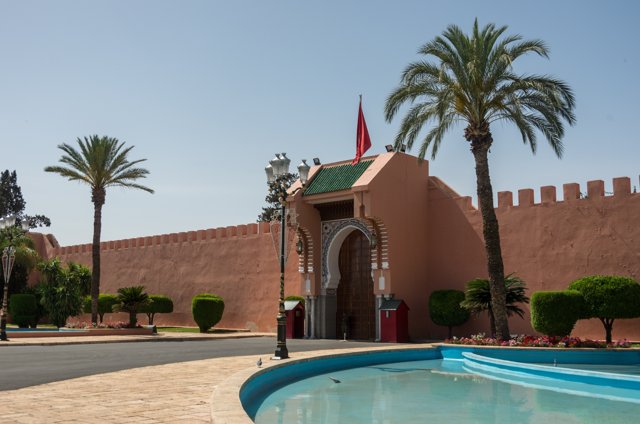
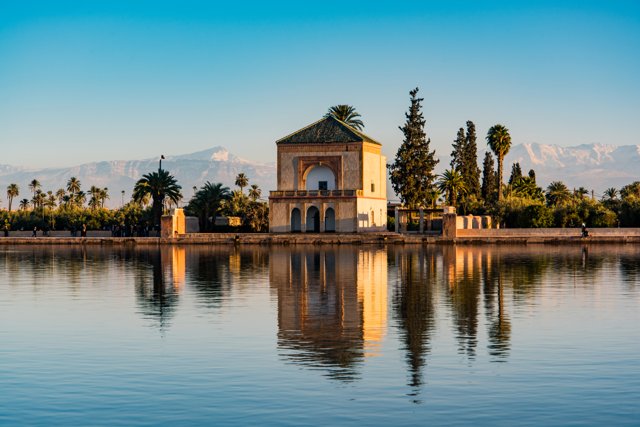
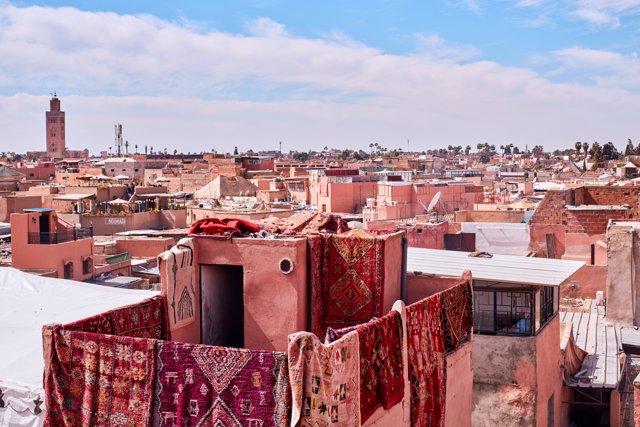
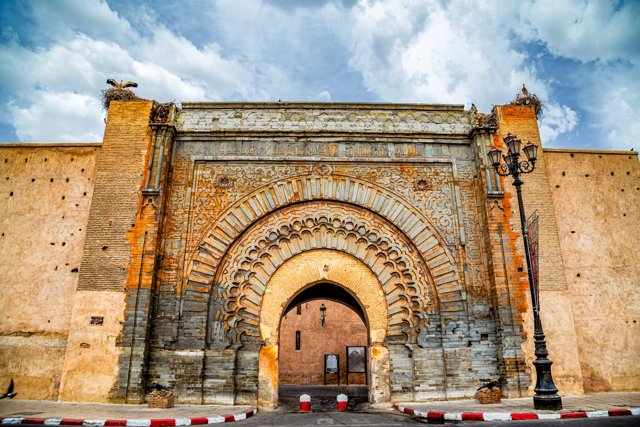
    Few places announce themselves quite like Marrakech. Long before you reach its gates, the city appears in warm, sun-baked shades of terracotta, earning its enduring nickname, the Red City. Framed by the snow-dusted Atlas Mountains, this former imperial capital feels both ancient and intensely alive — a place where medieval walls still enclose a world pulsing with energy and trade.

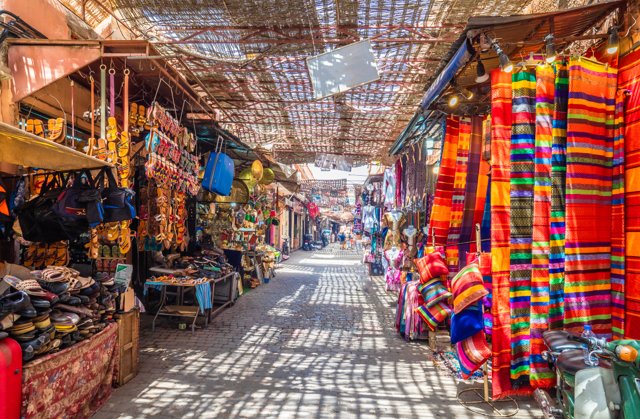
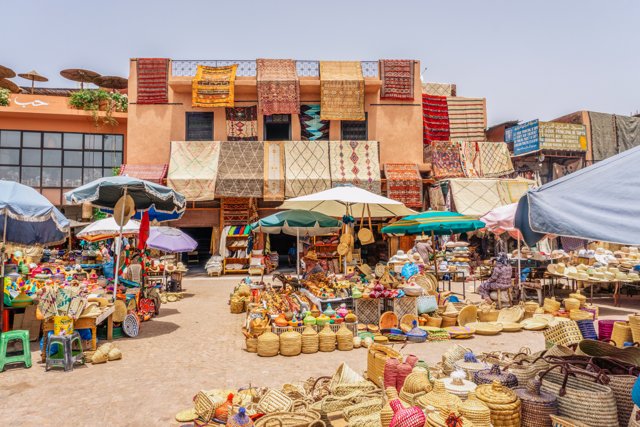
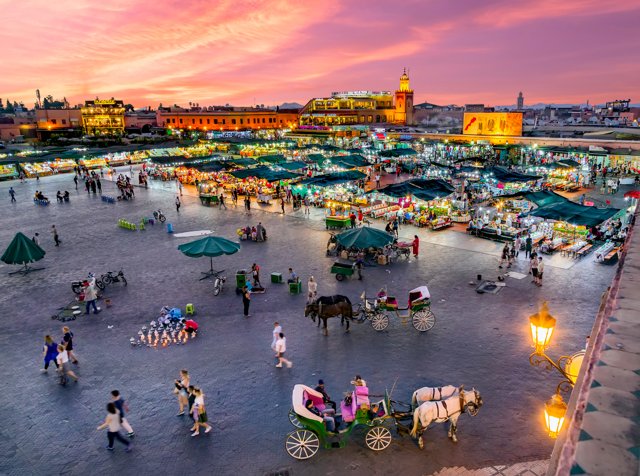
    At its heart lies the medina, a labyrinth of narrow alleys where life has unfolded for nearly a millennium. In the souks, Marrakech becomes a swirl of colour and movement: rugs, spices and brass lanterns spilling into tight lanes as donkey carts weave through the crowd. The experience reaches its peak at Jemaa el-Fna, the city’s legendary square.

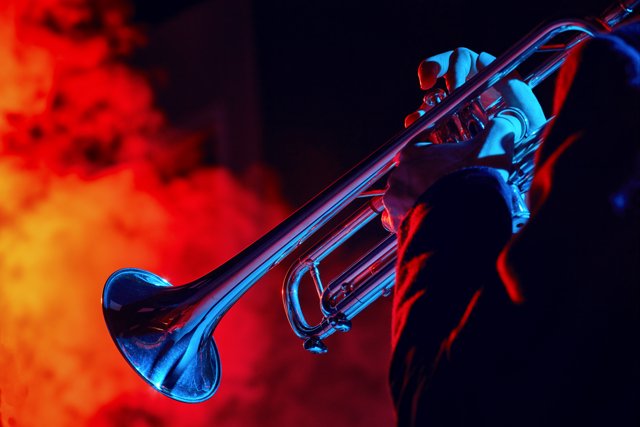
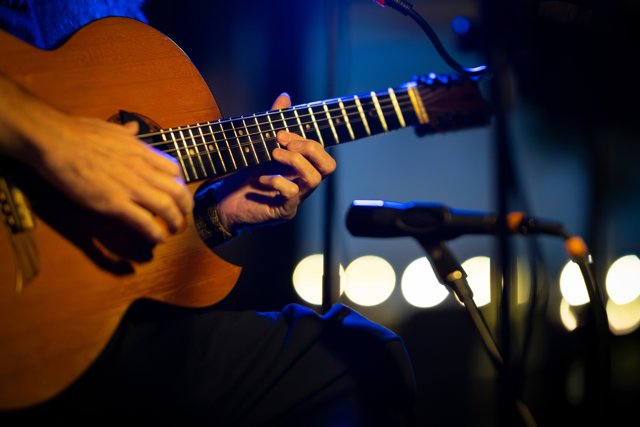
    At dusk, smoke rises from food stalls while musicians and storytellers gather, echoing traditions that have shaped Moroccan culture for centuries. Moments like these capture the essence of Marrakech — a city suspended between desert and mountains, myth and everyday life, whose ochre-hued spell lingers long after the journey ends.
Unique experiences in Marrakech

What to do in Marrakech

Plan your trip

Entry Requirements & Travel Documents

Citizens of numerous countries, including those from the EU, UK, United States, Australia, and Japan, can enter visa-free for stays of up to 90 days for tourism.

Your passport should typically be valid for at least six months beyond your arrival date and must have at least one blank page for entry stamps. Immigration officials may also ask for proof of onward travel or accommodation.

Travellers from countries that require a visa can apply through Morocco’s electronic visa (e-Visa) system, which allows applications to be completed online before departure.

Be sure to always check current requirements before departure.

Money, Currency & Paying in Marrakech

The official currency is the Moroccan dirham (MAD), commonly abbreviated locally as DH.

Morocco operates with a “closed currency”, meaning the dirham cannot be freely traded or obtained easily outside the country. Most travellers withdraw cash from an ATM or exchange money upon arrival.

Although credit cards are accepted at many hotels, upscale restaurants, and larger shops, cash remains essential, especially in the souks, small cafés, local taxis, and market stalls. It’s useful to carry small denominations for everyday purchases, tips, and quick transactions.

Weather, Seasons & When to Visit

The climate in Marrakech is defined by its position between the Sahara Desert and the nearby Atlas Mountains. The desert brings dry heat and clear skies, while the mountains moderate the weather slightly and can make evenings noticeably cooler once the sun sets.

Spring (March to May) and autumn (September to November) are widely considered the best times to visit the city, when daytime temperatures are warm but comfortable for exploring the medina and surrounding landscapes.

Summers can be rather intense, with temperatures often climbing past 40°C. Winter brings crisp, sunny days followed by surprisingly cool nights. Even in the colder months, however, Marrakech typically enjoys plenty of sunshine and mild daytime temperatures.

Health Insurance

Travel insurance is not a legal requirement for entering Morocco, but it is, nevertheless, strongly recommended. A comprehensive policy should cover medical treatment, hospitalisation, and emergency evacuation.

Marrakech has several reputable private clinics that offer good standards of care, but they typically require proof of insurance or a significant upfront payment before treatment begins. Public hospitals are available but can be busy, so many travellers prefer private facilities for non-emergency care.

Pharmacies are easy to find throughout the city and are generally well-stocked. Packing a small health kit with essentials such as rehydration salts, basic medication, and sunscreen is still a good idea.

In an emergency, dial 150 for medical assistance.

Connectivity, Roaming & Mobile Data

Mobile coverage is generally reliable in Morocco, especially in major cities such as Marrakech. Free Wi-Fi is a standard offering in hotels and cafés, but buying a local SIM card is often the easiest and most affordable way to stay connected. Prepaid data packages are widely available at airports, mobile phone shops, and convenience stores.

If your device supports eSIM, international data plans can be activated before arrival, allowing you to connect immediately after landing.

Airport & Main Arrival Hubs

Most international travellers arrive via Marrakesh Menara Airport (RAK), located about 6 km southwest of the city centre. It is one of Morocco’s busiest airports, handling frequent flights from major European hubs as well as seasonal connections from cities across Europe and the Middle East.

The airport itself is relatively compact and easy to navigate, though queues at passport control may take longer during peak arrival periods.
If you are travelling from outside Europe or the region, you may find more long-haul flight options through Mohammed V International Airport in Casablanca, Morocco’s main international gateway. From there, Marrakech can be reached via a short domestic flight or a comfortable three-hour train journey.

Main Train Stations

The city’s primary rail hub is Marrakech Railway Station, located in the modern district of Gueliz, around 3 km from the medina. Operated by the national railway company ONCF, the station connects Marrakech to major Moroccan cities including Casablanca, Rabat, Fez, and Tangier. Trains in Morocco are generally comfortable, affordable, and reliable, making rail travel one of the easiest ways to reach Marrakech from other parts of the country.

From the Airport / Station to the City Centre

From Marrakesh airport, the easiest and most convenient way to reach the medina or city centre is by taxi. The journey typically takes 15-20 minutes, depending on traffic. Official taxis wait outside the arrivals hall. By law, petit taxis should use a meter, but some drivers may prefer to quote a fixed fare, so it is wise to confirm the price or ask for the meter before starting the journey.

Public transport is also available. The Airport Bus L19, operated by Alsa Marrakesh, runs frequently and connects the airport with major stops including Jemaa el-Fna, Gueliz, and the Marrakech Railway Station.

If arriving by train, the station is located in the Gueliz district and is relatively central. Many hotels in Gueliz or Hivernage can be reached via a short taxi ride or even a 15-minute walk. Travellers heading to the medina, however, will usually need a taxi.

Private transfers are another popular option. Many riads inside the medina recommend pre-booking one, as cars cannot access the narrow lanes. Drivers typically drop guests at the nearest medina gate, where a porter with a handcart may assist with the final stretch.
Taxis & Ride-Hailing Services

Taxis remain the most common way to get around Marrakech. The small beige cars known as “petit taxis” operate within the city and can carry up to three passengers. By law, they must use a meter (compteur), though drivers may occasionally claim it’s not working. If the meter is not used, agree on a price before starting the journey.

For longer trips or groups, “grand taxis” (larger shared vehicles) operate between districts or to destinations outside the city.

Ride-hailing options are limited compared with many larger cities. Services such as inDrive and Heetch operate in Marrakech, though availability can vary. As a result, most visitors still rely primarily on taxis or pre-arranged transfers.

Arrival Tips & Common Mistakes to Avoid

  • Always carry small denominations of dirhams, as many taxis don’t accept cards and drivers rarely have change for large bills.
  • Avoid exchanging large amounts of money at the airport; city ATMs and exchange offices generally offer better rates.
  • Politely decline unsolicited guides or persistent helpers. A friendly but firm “no, thank you” while continuing to walk usually ends the interaction.
  • Book popular experiences ahead of time. Marrakech is Morocco’s busiest tourist destination, and tours, restaurants, and hammams can fill up quickly in peak season.
  • While Marrakech’s tap water is treated, its high mineral content can upset sensitive stomachs, so many travellers prefer bottled or filtered water.
  • Carry hand sanitiser and tissues, as public toilets may not always be stocked with soap or paper.

Public Transport & Zones

Marrakech’s public transport is functional and very affordable, though it requires a bit of local know-how. The city bus network, operated by Alsa Marrakesh, connects the medina to the modern districts.

A few key routes include Line 1, the primary tourist link between the medina and Gueliz, while Line 10 connects the train station to the Bab Doukkala bus hub. Airport Shuttle (L19) links Marrakech Menara Airport with major city stops.

Most visitors, however, find petit taxis or walking significantly easier for daily movement within the city.

Tickets & Passes

Bus tickets are usually purchased on board and paid in cash. Small change is recommended.

For buses, frequent users can purchase an Ikhlas Card through Alsa, which offers discounted fares.

Because public transport is limited, most travelers rely on petit taxis (for short city trips) and grand taxis (for longer journeys or shared regional trips). Mobile ride-hailing options are also growing, though availability can vary.

Walking & Cycling

Marrakech was built for the foot, not the wheel. The ancient medina is a car-free maze where "traffic" consists of donkey carts, hand-pushed delivery carts, and the occasional high-speed scooter.

Navigation apps can help, but getting lost in the medina is part of the experience. If you need directions, ask a shopkeeper or café staff member rather than someone lingering in the street, as unsolicited helpers sometimes expect payment or may try to lead visitors on an unofficial “tour”.

Cycling is possible but requires confidence and patience, as traffic outside the medina can be hectic, even though the city’s relatively flat terrain helps. Bike tours are also available and offer a slower way to explore neighbourhoods beyond the medina.

Nearby Destinations / Day Trips

Marrakech is also a gateway to some of southern Morocco’s most dramatic landscapes, all within a few hours’ drive.

Just 30 km south of the city (about 45 minutes by car), the rocky landscapes of Agafay Desert offer a desert experience without the long journey to the Sahara. Visitors can arrange camel rides, sunset dinners, and overnight stays in desert camps.

The eccentric, art-filled botanical park Anima Garden features sculptures, mirrored installations, and lush vegetation set against views of the Atlas Mountains. A free shuttle bus runs from near the Koutoubia Mosque. Travel time is about 45 minutes.

The foothills of the Atlas Mountains are among the most popular outdoor escapes from Marrakech. Popular destinations include Ourika Valley, Ouirgane Valley, and Toubkal National Park. Hiking routes lead to waterfalls, Berber villages, and alpine scenery. Travel time is roughly 1–1.5 hours, depending on the destination.

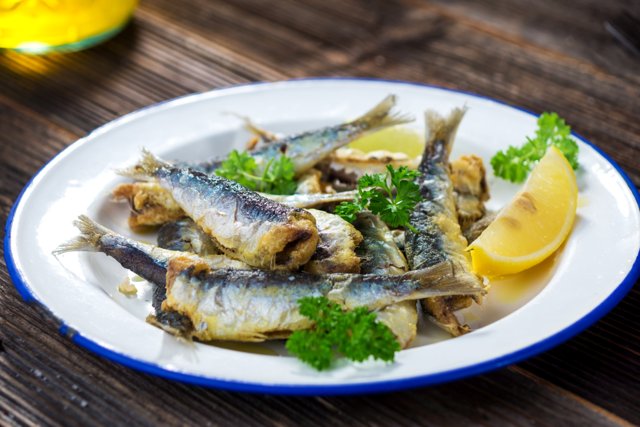
The relaxed coastal city of Essaouira is a popular day trip thanks to its Atlantic beaches. It is, however, a long day trip, almost 3 hours, but the fresh grilled sardines, breezy seaside cafés, and the UNESCO-listed medina make it all worth it.

Accessibility & Basic Safety Tips

Marrakech can present challenges for travellers with limited mobility, particularly inside the medina, where narrow alleys and uneven paving are common. Modern districts such as Gueliz and Hivernage are generally easier to navigate.

Public buses and petit taxis are not wheelchair accessible, though hotels can usually arrange private drivers or larger vehicles if needed.

The city is generally safe for visitors, but they should remain alert in crowded areas such as Jemaa el-Fnaa and the surrounding souks. Keep valuables secure and avoid displaying expensive items.

Be cautious of common tourist traps.. For example, someone may claim your riad or street is “closed” in order to redirect you to a shop, hotel, or paid guiding service. If in doubt, verify directions with your accommodation or a nearby business.

Language, Culture & Local Etiquette

The main languages spoken in Marrakech are Moroccan Arabic (Darija) and French, though English is increasingly common in tourism-related businesses. Learning a few local words is always appreciated and can help break the ice. A common greeting is “Assalaamu alaykum” (peace be with you).

Here, bargaining is not just a transaction; it is a social ritual, particularly in the souks and small markets. Vendors often quote an initial price, expecting negotiation. Treat the exchange as a friendly interaction rather than a confrontation.

Dress in Marrakech is generally relaxed, but modest clothing is appreciated, especially in traditional neighbourhoods and religious settings.

During Ramadan, the city adopts a different rhythm. Many cafés and restaurants remain closed during daylight hours, while evenings become lively as families gather for iftar, the meal that breaks the fast.

Neighbourhoods

Marrakech is a tale of two eras, divided between the ancient and the avant-garde.

  • Medina & Jemaa el-Fna: The pulsating heart of the city. By day, it is a whirlwind of fruit juice stalls and henna artists; by night, it transforms into a smoky, open-air kitchen surrounded by musicians and street performers. At its centre lies Jemaa el-Fnaa, the city’s famous main square.
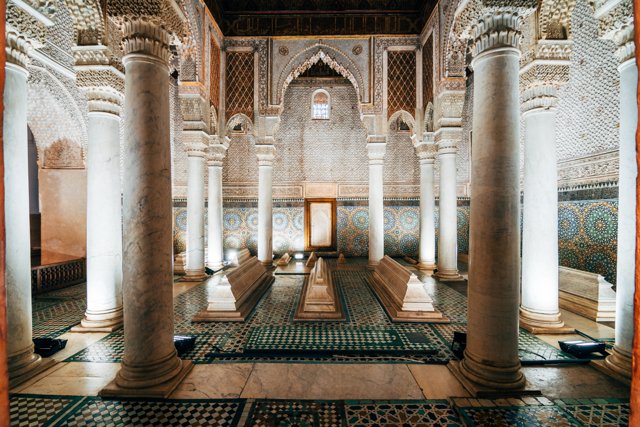
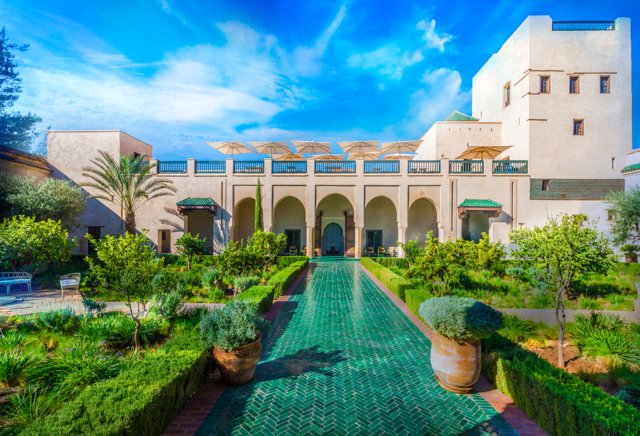
  • Mouassine: A sophisticated quarter known for 16th-century Saadian architecture, hidden gardens like Le Jardin Secret, and some of the city's finest private hammams.
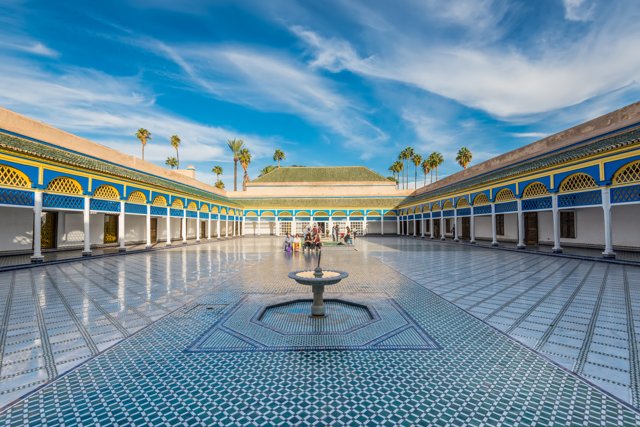
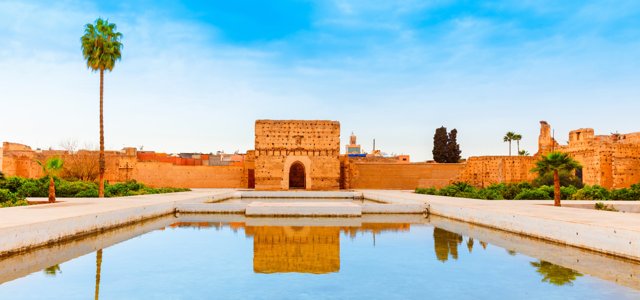
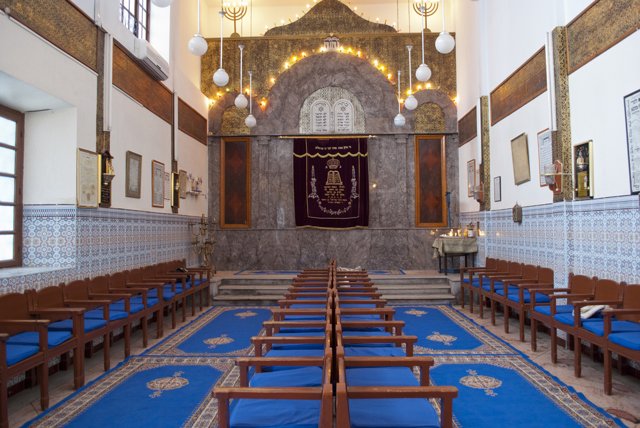
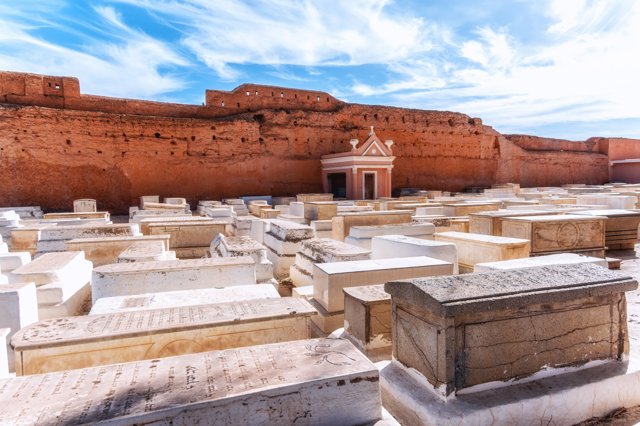
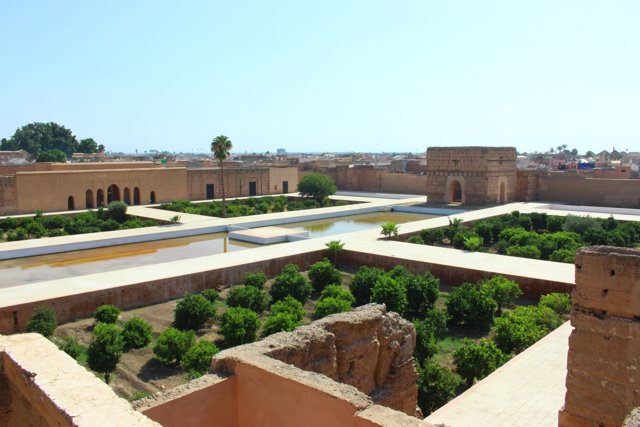
  • Kasbah & Mellah: Located to the south, these districts offer a calmer pace. Explore the ruins of Badi Palace and the fascinating history of the old Jewish quarter (Mellah).
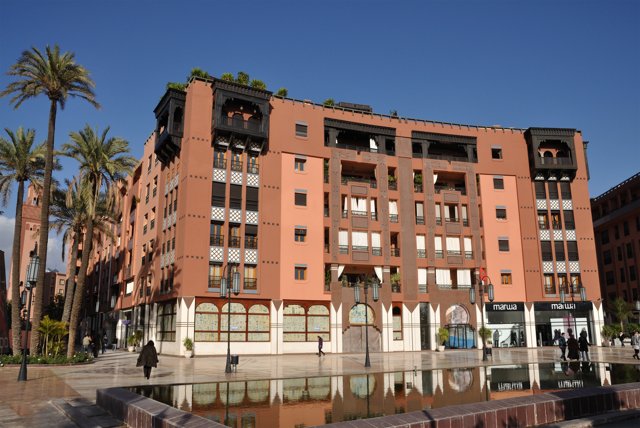
  • Gueliz (Ville Nouvelle): The French-built "New Town". Here, wide boulevards host Art Deco buildings, contemporary art galleries like Comptoir des Mines, fashion boutiques, and chic European-style bistros.

Gastronomy

Marrakech’s cuisine reflects centuries of Berber, Arab, and Andalusian influences, combining aromatic spices with slow cooking techniques.

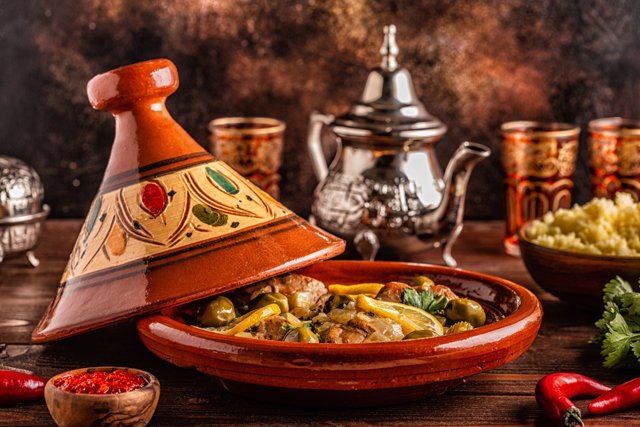
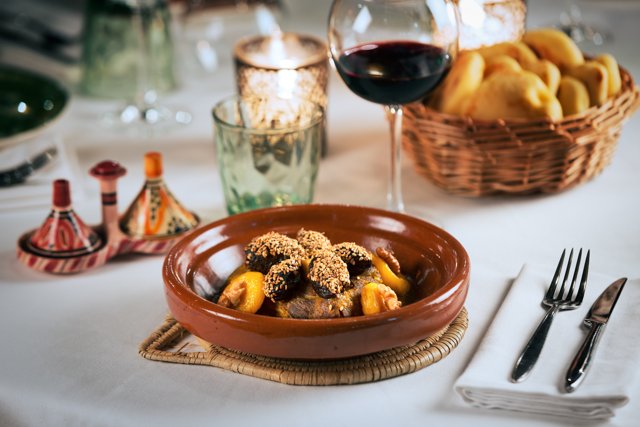
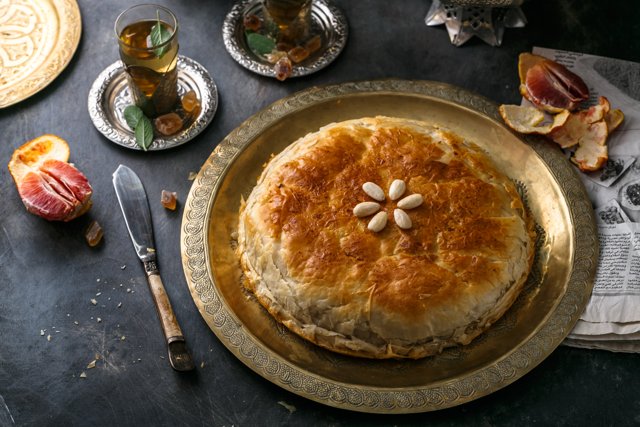
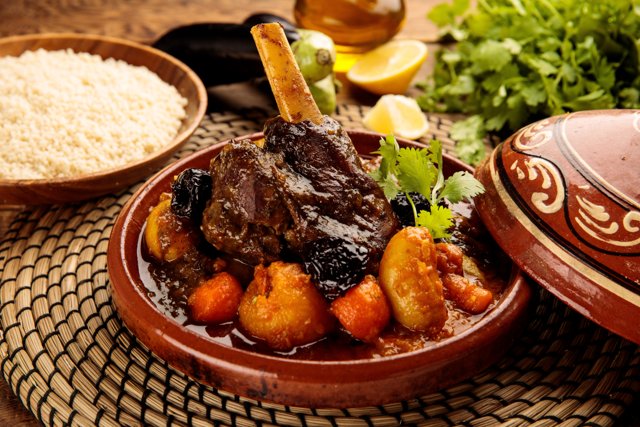
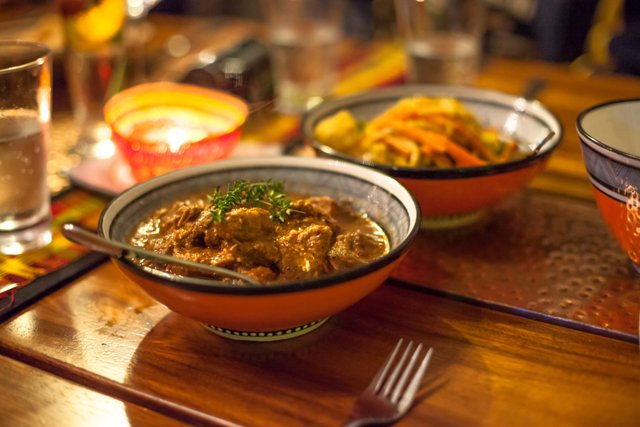
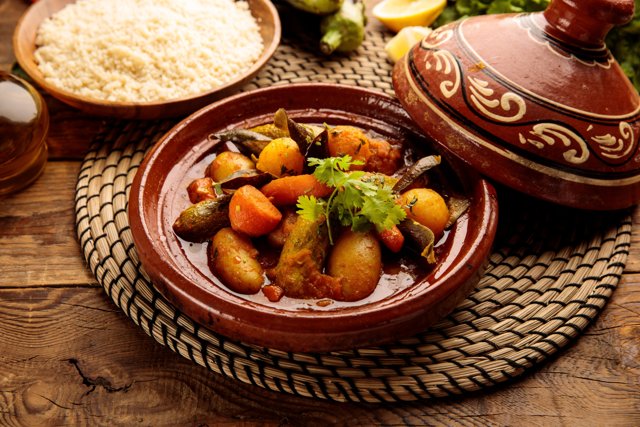
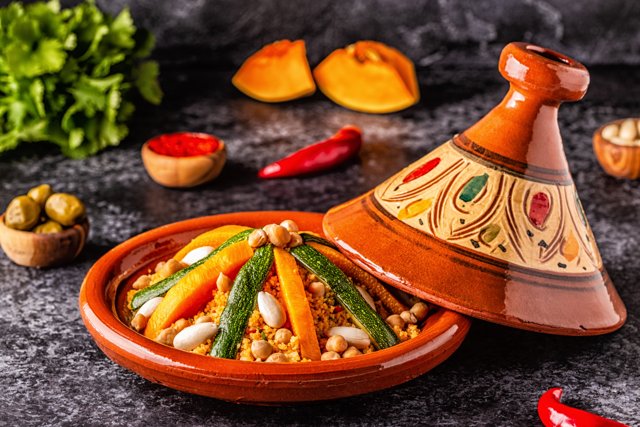
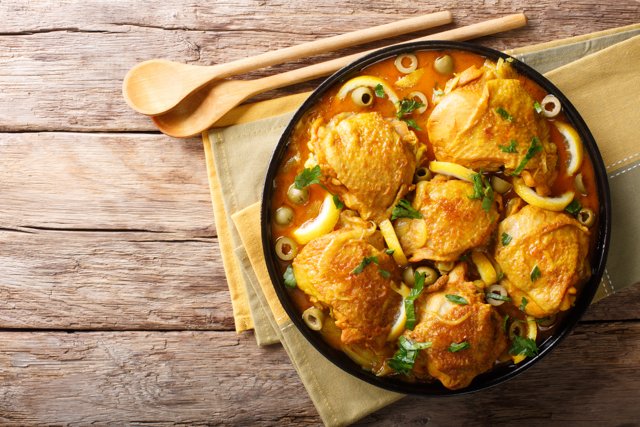
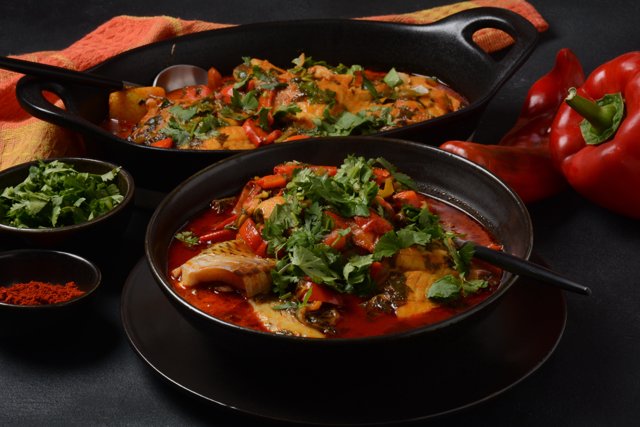
Signature dishes include tajine(a slow-cooked stew of meat and vegetables prepared in a cone-shaped clay pot), couscous (steamed semolina served with vegetables and meat), pastilla (a savoury-sweet pastry layered with poultry, almonds, and spices), and tanjia (a Marrakech specialty of lamb slow-cooked with preserved lemon and spices). 

Street food is a big part of the city’s culinary culture, particularly around Jemaa el-Fnaa, where vendors sell grilled skewers, soups such as harira, fresh orange juice, and local snacks like msemen pancakes.

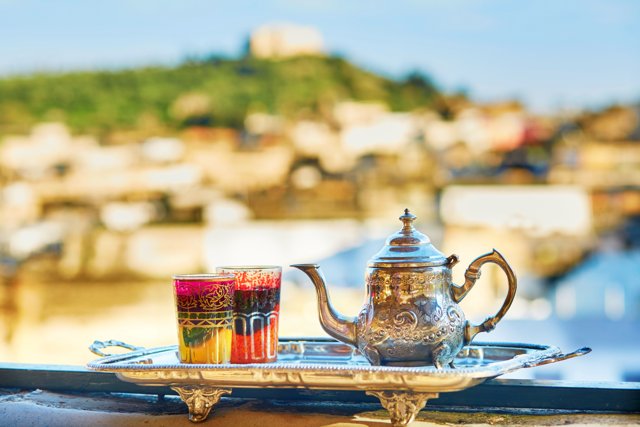
Throughout it all flows Mint Tea (often called "Berber Whiskey"), the ubiquitous symbol of Moroccan hospitality. It is served sweet, poured from a height to create a frothy head, and is the mandatory accompaniment to any negotiation.

City Rhythm

Marrakech moves to a rhythm shaped by heat, prayer times, and evening social life.

Mornings begin early as shops open and markets start trading. By midday, the pace slows as temperatures climb, with many locals retreating indoors.

Late afternoon brings renewed energy, especially around Jemaa el-Fnaa, where performers gather, and food stalls begin to appear.

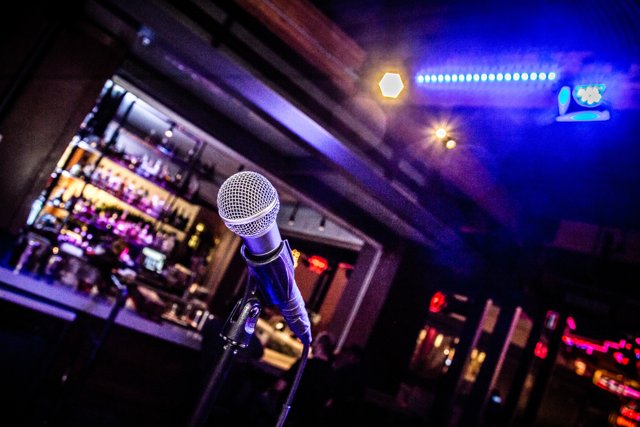
Evenings are the city’s most vibrant time. Rooftop terraces fill with diners, markets stay open late, and cafés remain lively well into the night.

Things to Do

No visit to Marrakech is complete without getting lost in the souks, the sprawling markets that radiate from Jemaa el-Fnaa. These maze-like alleys are packed with spice stalls, lantern makers, leather workshops, and carpet merchants. Bargaining is expected, and wandering without a plan is part of the experience.

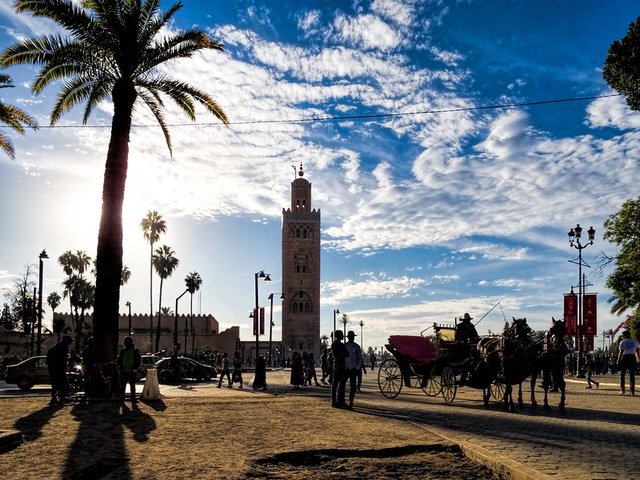
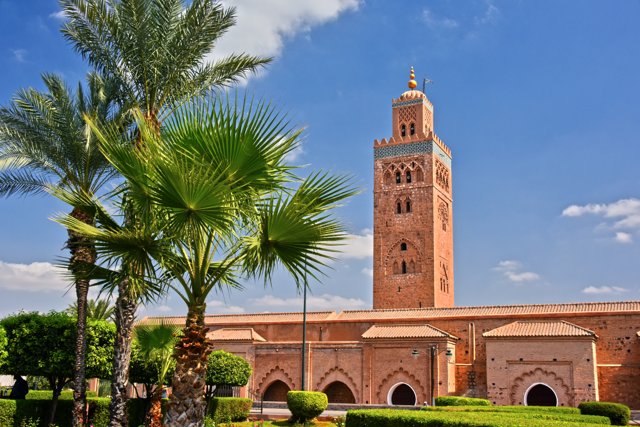
A short walk away, the elegant minaret of Koutoubia Mosque rises 70 metres above the city and remains Marrakech’s spiritual landmark. While the mosque interior is reserved for Muslim worshippers, the surrounding gardens are open to visitors and especially beautiful at sunset.

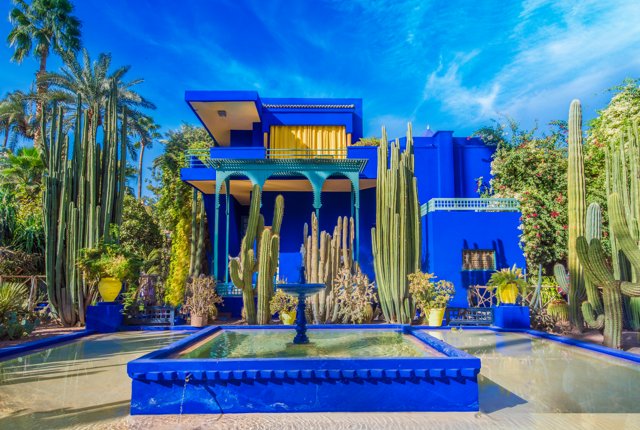
One of Marrakech’s most iconic sights is Jardin Majorelle, a cobalt-blue botanical garden created by French painter Jacques Majorelle in the 1920s and later restored by designer Yves Saint Laurent and his partner Pierre Bergé. Today, the gardens are a peaceful refuge of exotic plants, fountains, and vivid architecture.

Few experiences feel more authentically Moroccan than visiting a traditional hammam. Steam, black soap scrubs with a kessa glove, and mineral-rich clay masks form part of a ritual of cleansing and relaxation that has been practiced in Morocco for generations.

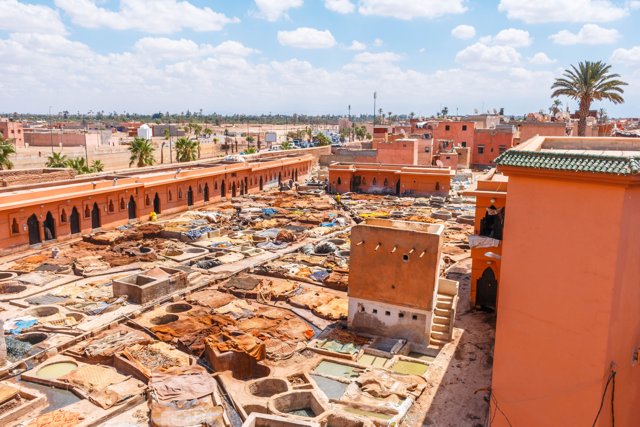
For a glimpse into one of Marrakech’s oldest trades, visit the Bab Debbagh Tanneries. The smell can be intense, but watching leather being processed using centuries-old techniques offers a fascinating window into traditional craftsmanship.

Best hotels in Marrakech

Frequently asked questions

Is Marrakech safe for women travellers?

Yes. Marrakech is a very welcoming city for women, and many travel here solo every year. That said, as in any busy destination, it helps to dress modestly, stay aware of your surroundings, and walk confidently through crowded areas. The city is well accustomed to tourism, and sticking to lively neighbourhoods and main streets usually ensures a comfortable experience.

Is Marrakech worth visiting?

Absolutely. Marrakech is one of North Africa’s most fascinating cities, known for its historic medina, colourful souks, ornate palaces, and vibrant food scene. From historic architecture to contemporary art galleries and desert excursions, the city offers a rich mix of culture, history, and sensory experiences.

Does Marrakech have beaches?

No. While Marrakech is a desert city, the Atlantic coast is within easy reach. You can enjoy the best of both worlds by taking a scenic day trip to the coastal gem of Essaouira (about 3 hours away) or Agadir.

Does Marrakech have Uber?

Ride-hailing options are gradually expanding in Morocco. Uber resumed operations in Marrakech in 2025 with licensed professional drivers, although availability can vary. Many visitors still rely on traditional petit taxis, which remain the most common way to move around the city.

How many days should I spend in Marrakech?

For most travellers, three days is a comfortable amount of time. This allows you to explore the medina and souks, visit major landmarks and gardens, and still leave time for a hammam, rooftop dining, or a day trip to the Atlas Mountains or the desert.

Is Marrakech expensive?

Marrakech offers options for every budget, from affordable street food and traditional riads to stylish boutique hotels and luxury resorts. Many everyday experiences, such as local meals, taxis, and entry to historic sites, remain relatively inexpensive compared with many major travel destinations.

Top destinations