Carcassonne

More fortress than town, more legend than ruin, Carcassonne stands watch above the Aude plain.

  • Carcassonne

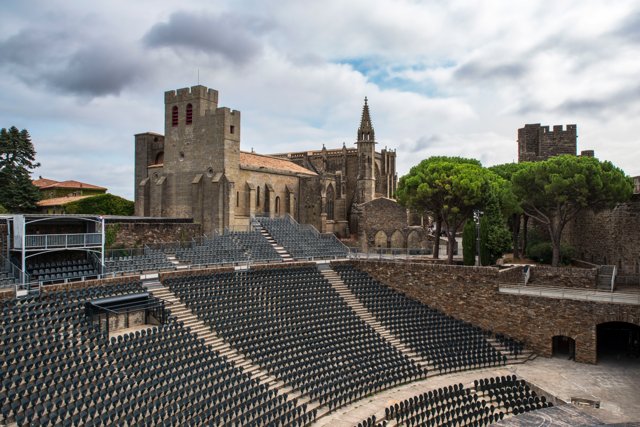
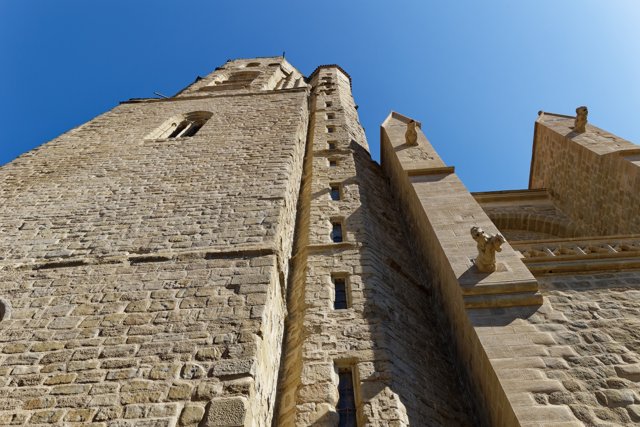
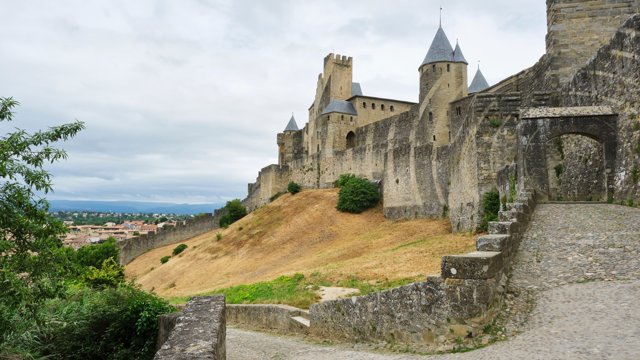
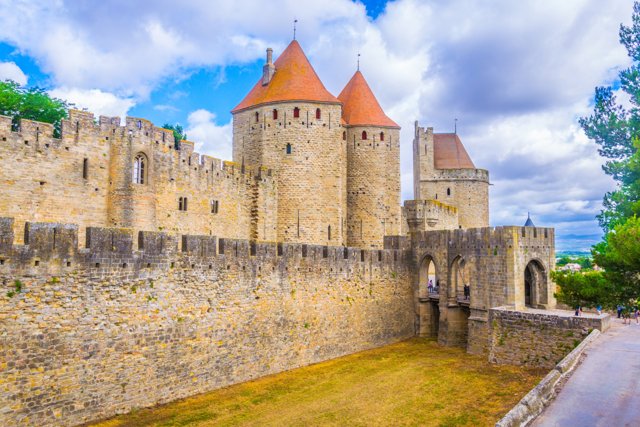
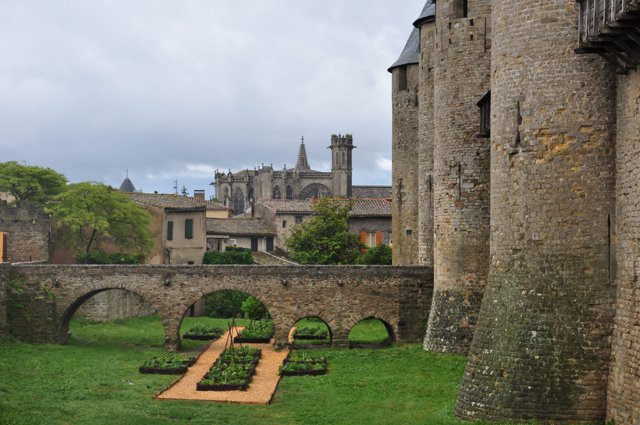
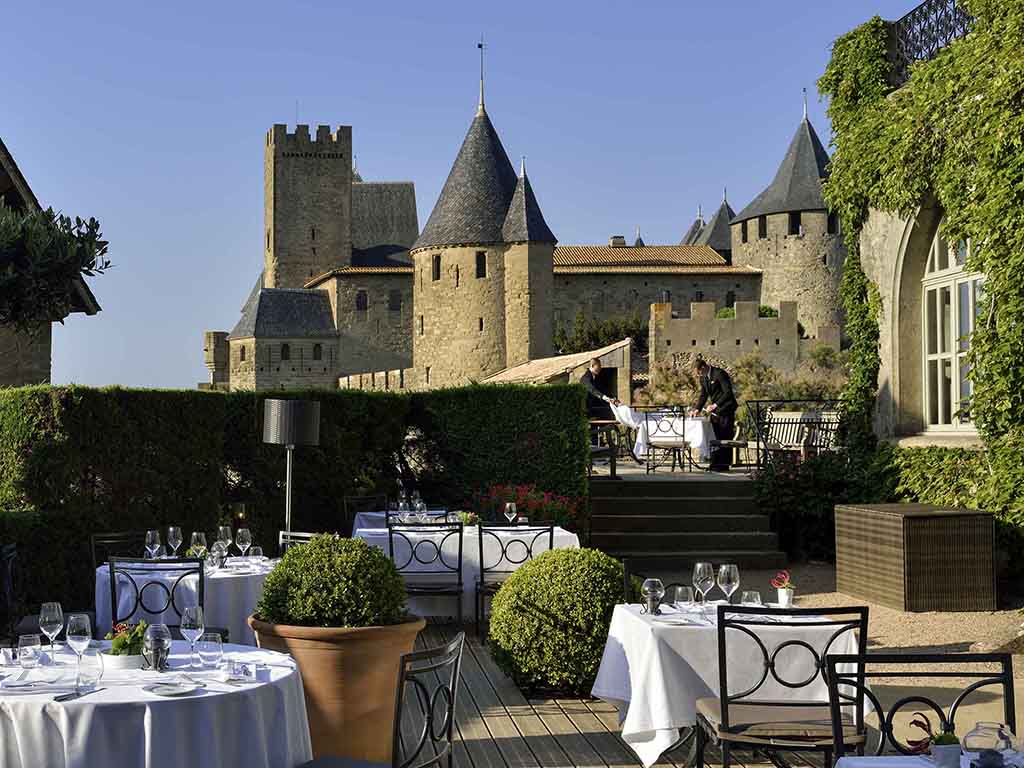
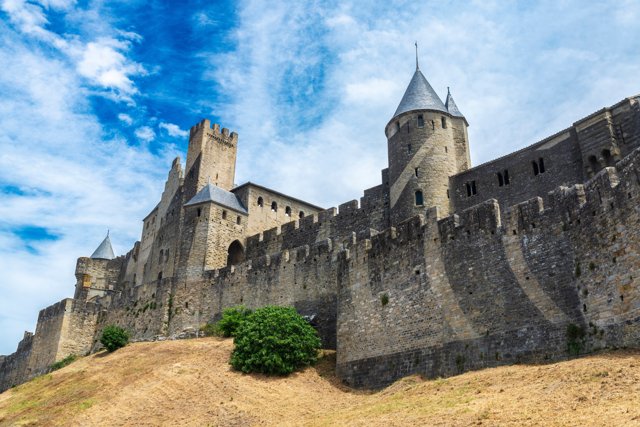
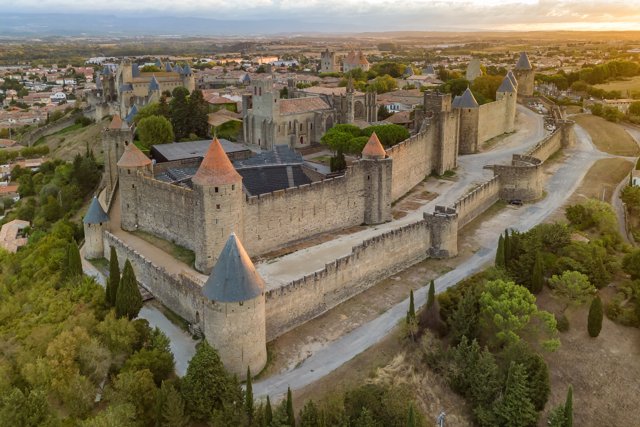
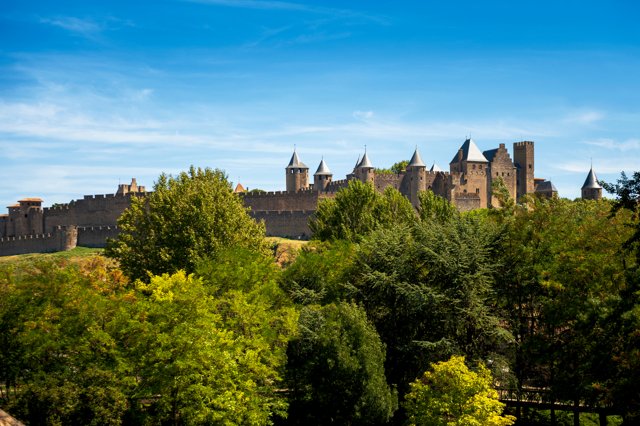
    From a distance, Carcassonne appears less like a functioning town than a medieval mirage. The fortified Cité rises above the Aude plain, its double walls and pointed watchtowers dominating the rocky hilltop. What visitors see today is the result of centuries of sieges, occupations, and restoration — a fortress that once served a strategic purpose rather than a picturesque one.

    Inside the gates, the scale shifts. Narrow lanes, leaning façades and small squares form a living town centred on the Château Comtal and its layered ramparts. Near the entrance, the bust of Dame Carcas recalls the legend of a clever ruse that ended a siege. Myth or not, the story captures the spirit of Carcassonne — a city shaped by resilience that today preserves one of Europe’s most striking medieval landscapes under the southern light of Languedoc.
Unique experiences in Carcassonne

Plan your trip

Entry Requirements & Travel Documents

France is part of the Schengen Area. Therefore, EU and EEA citizens can enter the country with a valid passport or national ID card. Many non-EU travellers from visa-exempt countries may stay up to 90 days within a 180-day period without a visa, subject to passport validity requirements that vary by nationality.

From late 2026, travellers from many visa-exempt countries, including the United Kingdom, United States, Canada, Brazil, Japan, and Australia, will need to apply online for ETIAS (European Travel Information and Authorisation System) before travelling to France and other Schengen countries for short stays. Until ETIAS becomes operational, passport-only entry remains in place.

Be sure to always verify entry requirements with official government sources before departure, as conditions can change. 

Money, Currency & Paying in Carcassonne

France uses the euro (€ / EUR). Card payments are widely accepted in Carcassonne, including contactless and mobile wallets, and you can comfortably navigate most of your stay without carrying large amounts of cash. 

That said, smaller vendors, market stalls, or independent cafés may set minimum card amounts, particularly in the Bastide Saint-Louis (the lower town).

ATMs are available in the lower town. Inside the medieval Cité, options are more limited, so withdraw cash before heading uphill if needed.

Weather, Seasons & When to Visit

Carcassonne sits in southern Occitanie, where Mediterranean warmth meets inland dryness.

Summers are hot and dry, with temperatures often reaching the low to mid-30s °C. The stone walls of the Cité retain heat, and shade is limited along the ramparts.

Spring and early autumn offer the best balance. May, June, and September bring stable weather, softer light, and fewer crowds, making the fortress feel more open and enjoyable.

Winter is quieter and more contemplative. While some venues inside the Cité close seasonally, the atmosphere becomes calmer and more authentic.
The region is influenced by the Cers, a north-westerly wind that can feel brisk, especially on exposed ramparts and outside summer, despite often clear skies.
Health Insurance

UK and EU visitors should carry a valid GHIC (Global Health Insurance Card) or EHIC (European Health Insurance Card), which provides access to medically necessary treatment within France’s public healthcare system. However, this does not replace full travel insurance, which is strongly recommended.

Non-EU travellers should arrange comprehensive medical insurance before arrival, as hospitals and clinics may request payment or proof of coverage for non-emergency care.

Pharmacies are easily identified by flashing green crosses and can assist you with minor medical concerns. In an emergency, dial 112, the universal emergency number across the European Union.

Connectivity, Roaming & Mobile Data

Mobile coverage in Carcassonne is strong, including within the medieval walls. Public Wi-Fi exists in parts of the city but should not be relied upon for consistent connectivity.

If your mobile plan is from an EU/EEA provider, roaming in France is generally included at domestic rates under EU “Roam Like at Home” rules, subject to fair-use limits. If your provider is outside the EU/EEA, roaming charges may apply, so check before departure.

If you prefer a local solution, prepaid SIM cards and eSIM options from French operators such as Orange or SFR are straightforward to arrange at larger airports.

Airport & Main Arrival Hubs

Carcassonne has its own small airport, Carcassonne Airport (CCF), located about 3 km west of town. It serves a limited number of primarily European routes, often seasonal and low-cost. Convenient if schedules align, but not a major international gateway.

For most long-haul travellers, Toulouse-Blagnac Airport (TLS) is the most practical arrival point. It is well connected to European and intercontinental routes and lies about an hour away by train or car. Montpellier-Méditerranée Airport (MPL) offers another alternative, though slightly farther.

Main Train Stations

The town’s rail link is the Carcassonne Station, located in the Bastide Saint-Louis (the lower town), directly beside the Canal du Midi.

Frequent TER regional trains connect to Toulouse (approximately 45–60 minutes) and Narbonne (around 30 minutes), with onward connections to Montpellier (roughly 1.5 hours). 

Intercités trains also run along the same axis, offering direct connections to cities such as Marseille and Bordeaux. High-speed TGV services are less frequent than in major hubs, but Paris and Lyon are reachable with a single connection, typically via Toulouse or Narbonne.

From the Airport / Station to the City Centre

Carcassonne Airport lies about 3 km west of town. There is no rail connection from the terminal, but local buses align with flight arrivals and reach the city centre or the train station in around 15–20 minutes. Taxis are available outside the terminal and take under 10 minutes to reach the lower town. If your accommodation is inside the medieval Cité, note that vehicles cannot circulate within the walls and you will be dropped at designated access points.

For many international travellers, Toulouse-Blagnac Airport is the main gateway. From there, the most practical option is the Navette Aéroport shuttle bus to Toulouse Matabiau Station (about 20–30 minutes), followed by a regional TER train to Carcassonne, which takes roughly one hour. Hiring a car is another flexible option, particularly if you plan to explore the surrounding Languedoc countryside.

Arriving by train at Carcassonne Station places you in the Bastide Saint-Louis beside the Canal du Midi. The medieval Cité lies across the River Aude, about a 20–30 minute walk uphill. With light luggage the walk is manageable, though taxis are available if needed.

Taxis & Ride-Hailing Services

Carcassonne is small, and taxi supply reflects that. You will usually find taxis waiting at Carcassonne Station and after scheduled arrivals at Carcassonne Airport, but you won’t find vehicles circulating in large numbers throughout the day.

Uber is generally available, though coverage is not comparable to larger French cities. For time-sensitive journeys, such as early morning departures, late evening arrivals, or airport transfers, a pre-booked taxi or arranged transfer is the more reliable option.

Keep in mind that vehicles cannot circulate freely inside the fortified walls. If your accommodation is within the Cité, you will normally be dropped off at a designated access gate and walk the final stretch over cobbled lanes.

Arrival Tips & Common Mistakes to Avoid

  • The medieval Cité and the train station are separated by the River Aude and a gradual uphill approach. It might appear close on a map, but with luggage or in summer heat, it feels longer.
  • Staying within the Cité is atmospheric, but vehicle access is restricted, and parking is located outside the walls. Confirm drop-off logistics with your accommodation in advance.
  • In July and August, stone surfaces retain heat, and tour groups concentrate between late morning and mid-afternoon. Early morning or early evening visits are considerably more comfortable.
  • Carcassonne is not a major metropolitan hub. Public transport reduces significantly in the evening, and taxi numbers are limited. Build buffer time into onward travel, especially on Sundays or public holidays.
  • The local airport is small, with flights clustered rather than constant. If arriving late, confirm bus timetables in advance or pre-arrange a transfer.
  • Many visitors focus exclusively on the medieval fortress. The Bastide Saint-Louis offers markets, everyday cafés, and a more grounded counterpoint to the theatrical setting of the Cité.

Public Transport & Zones

Carcassonne operates a modest local bus network serving the lower town, surrounding neighbourhoods, and the airport. It is practical but limited in scope and frequency compared to larger French cities. The primary hub is Place Gambetta in the Bastide (lower town).

There are no fare “zones” in the metropolitan sense; tickets are generally valid per journey within the network. For most visitors staying near the Cité or in the Bastide, public buses are rarely essential, as the historic core and main sights are within walking distance.

Regional mobility is stronger than local mobility. Trains connect Carcassonne efficiently to Toulouse, Narbonne, and other towns along the Occitanie corridor.

Tickets & Passes

Local bus tickets can be purchased onboard (often via the driver) or through designated sales points in town. Contactless payment is not universally available on all local buses, so carrying small change remains sensible. 

For regional rail travel, TER services connect Carcassonne efficiently with Toulouse, Narbonne and Montpellier. Tickets can be purchased from station machines, ticket counters, or via the SNCF Connect app.

Walking & Cycling

Carcassonne is fundamentally a walking destination. The medieval Cité is entirely pedestrian, with cobbled lanes and uneven surfaces. The Bastide is laid out on a more regular grid and is easy to navigate on foot.

Cycling is possible along the Canal du Midi and the riverbanks, offering scenic and relatively flat routes. Within the Cité itself, cycling is impractical due to narrow streets and foot traffic.
Nearby Destinations / Day Trips

Carcassonne sits on a well-connected regional rail corridor, making it an easy base for exploring western Occitanie. Frequent TER trains run west to Toulouse (around 45–60 minutes) and east to Narbonne (about 30 minutes), with onward connections to Montpellier in roughly 1.5 hours.

Beyond the rail line, the Aude countryside opens into vineyards, fortified hilltop ruins, and small agricultural towns. A car offers greater flexibility if you plan to explore further.

Twenty minutes north by road lie the dramatic ruins of Châteaux de Lastours, four former strongholds strung along a rocky ridge with sweeping valley views. To the west, Castelnaudary, often described as the capital of cassoulet, sits along the Canal du Midi with a quieter port atmosphere. Eastward, Narbonne reveals its Roman past through a monumental Gothic cathedral, while Toulouse, the so-called “Pink City”, offers a larger and more dynamic urban contrast.

Accessibility & Basic Safety Tips

The medieval Cité presents accessibility challenges. Cobblestones, narrow passageways, and inclines make wheelchair access and stroller navigation difficult in certain areas. Some sections of the ramparts and the Château Comtal involve stairs and uneven surfaces.

The Bastide Saint-Louis is more level and accessible.

Carcassonne is generally very safe. Standard precautions apply: remain aware of belongings in crowded summer periods, especially inside the Cité, where visitor density increases.

Heat and sun exposure are more immediate concerns than personal security in peak season. Water, shade planning, and realistic pacing are essential.

Language, Culture & Local Etiquette

French is the primary language in Carcassonne. English is widely spoken in hotels, restaurants inside the Cité, and tourism-facing businesses, but less consistently in everyday settings in the Bastide. 

A simple “Bonjour” upon entering a shop or café is not optional politeness; it is basic social protocol. Transactions in France begin with an acknowledgement. Skipping this can feel abrupt.

Carcassonne sits in Occitanie, historically distinct from northern France. While modern life is fully integrated into the French state, regional identity remains visible in cuisine, accent, and local pride. The rhythm is southern: lunches are respected, evenings begin later, and social life shifts outdoors when weather permits.

Tipping is modest. Service is included in restaurant bills (“service compris”), though rounding up or leaving small change for good service is customary.

Neighbourhoods

Carcassonne is structurally divided into two primary areas:

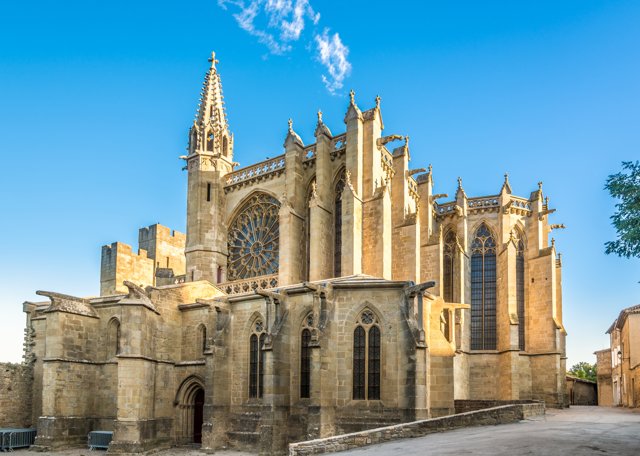
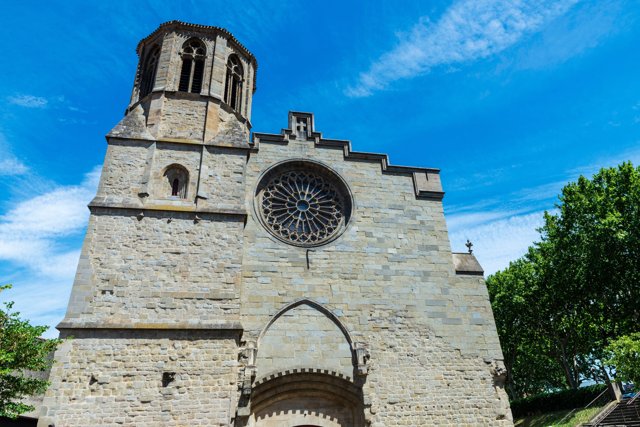
  • The Cité Médiévale: The fortified hilltop citadel and UNESCO-listed ensemble, dominated by the Château Comtal and the Basilica of Saints Nazarius and Celsus. This is where most visitors concentrate. It is pedestrian, theatrical, and highly evocative, particularly after day-trippers depart.
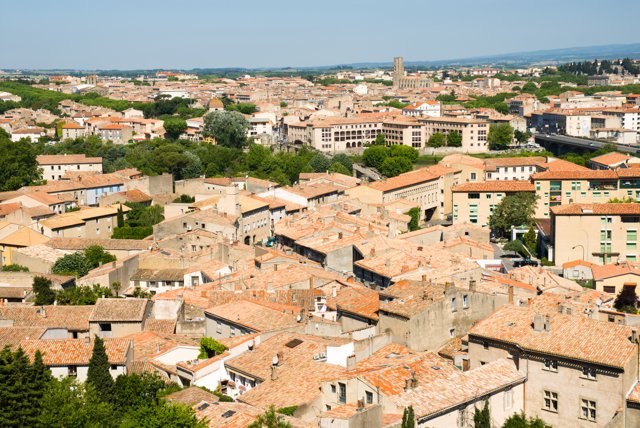
  • The Bastide Saint-Louis: The 13th-century lower town is laid out in an organised grid across the River Aude. This is the "real" Carcassonne: markets, banks, pharmacies, schools, residential streets. It provides a useful counterbalance to the medieval setting above.

Bridges across the Aude connect the two in roughly 15–20 minutes on foot.

Gastronomy

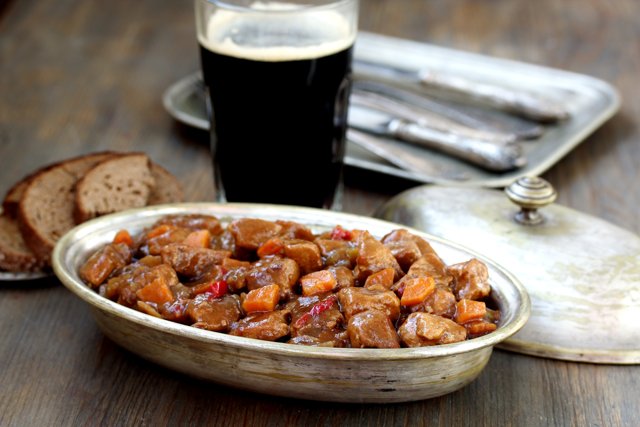
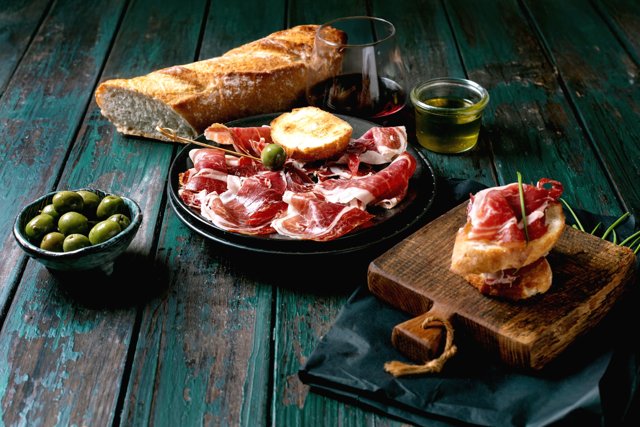
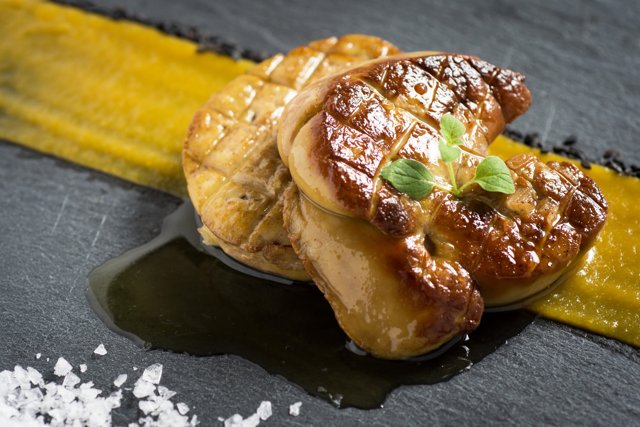
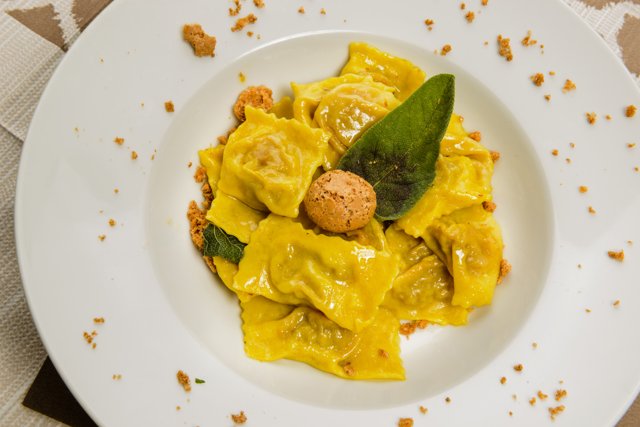
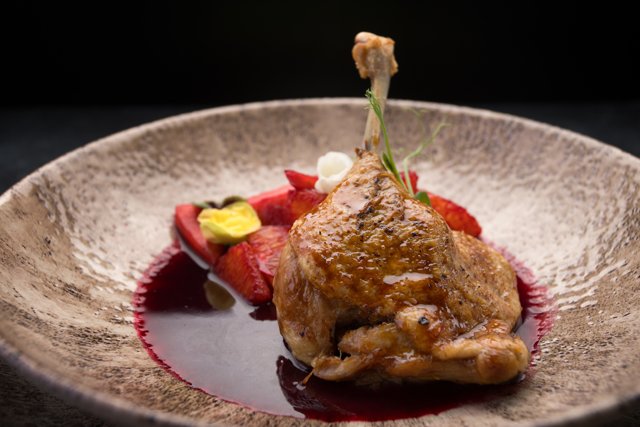
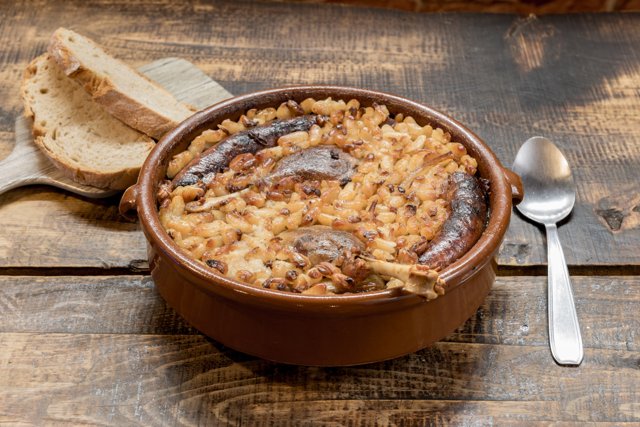
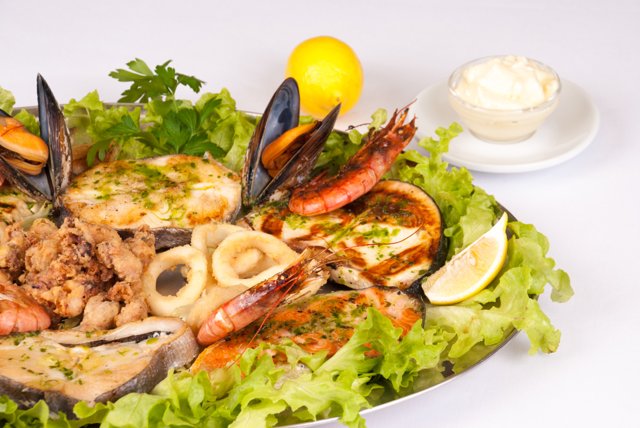
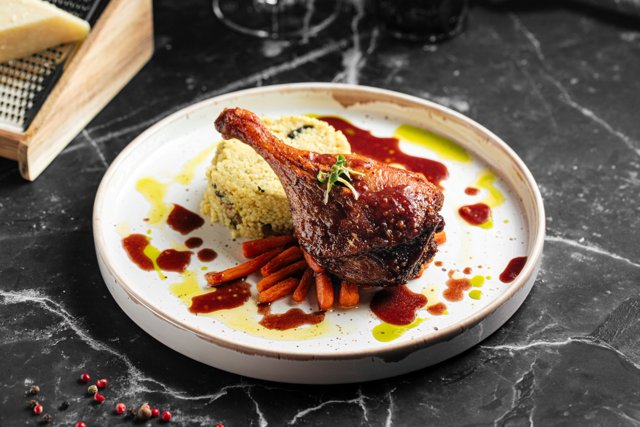
Carcassonne sits in the heart of cassoulet country. The rich, slow-cooked stew of white beans, duck confit, and Toulouse sausage is not a tourist invention but a regional staple. Every chef in town has a "secret" version.

Languedoc wines are integral to the table: robust reds, increasingly refined blends, and strong value compared to more famous French regions. Vineyards extend in all directions around town, and local appellations are worth seeking out. Look for AOC Cabardès or AOC Minervois on the menu — structured southern reds that cut cleanly through the richness of cassoulet and duck-based dishes.

Menus inside the Cité tend toward traditional regional fare and tourist-oriented pricing. The Bastide often offers better value and a more local dining atmosphere.

For something distinctly local, look for le tourgnol: an aniseed-flavoured brioche found in bakeries in the Bastide. It is subtle rather than sweet, lightly scented with anise, and more typical of everyday regional baking than of tourist pâtisserie displays.

City Rhythm

Carcassonne operates on two overlapping rhythms: visitor flow and local life. 

From late morning to mid-afternoon, the Cité absorbs coach groups and independent day visitors, particularly between April and October. Early morning and post-18:00 are noticeably calmer.

Evenings belong to residents and overnight guests. Restaurants fill gradually, and streets get quieter without becoming deserted.

Sundays are slower. Smaller shops close, though restaurants and cafés in the Cité typically remain open in season.

Winter compresses activity further. What remains feels more authentic but less animated.

Things to Do

Carcassonne is not a checklist city. It rewards a slower visit, where the layers of the place gradually come into focus.

Start with the ramparts. Walking between the inner and outer defensive walls of the Cité gives you scale, not just views. From certain stretches, the Pyrenees appear faint on the horizon while vineyards spread across the plain, revealing why this was once a frontier stronghold rather than a decorative castle.

Step inside the Château Comtal to understand how the fortress functioned, then visit the Basilica of Saints Nazarius and Celsus for a quieter counterpoint. Crossing the river brings you to the Bastide Saint-Louis, where the atmosphere shifts entirely. On Place Carnot, cafés spill into the square and daily life replaces pageantry, especially on market mornings.

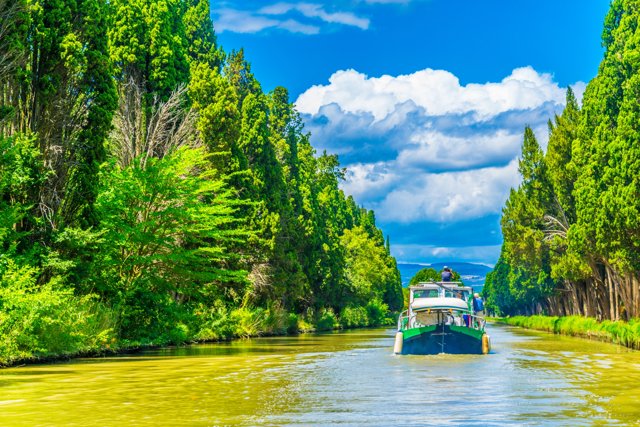
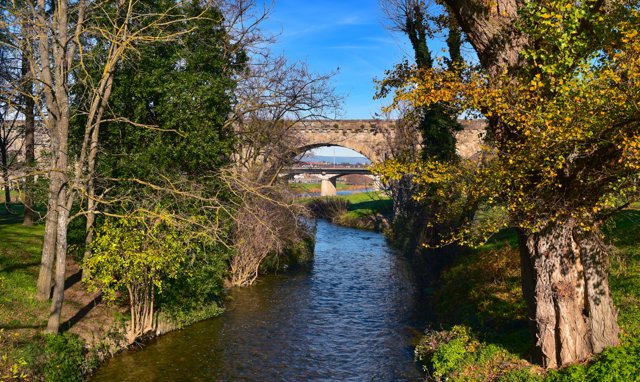
Along the edge of town runs the Canal du Midi, a UNESCO-listed waterway shaded by plane trees. You can rent a boat, cycle sections of the towpath, or simply walk its straight, measured line.

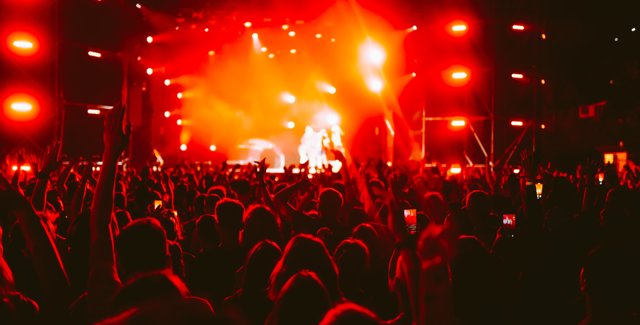
If you are visiting on 14 July, the annual Embrasement de la Cité transforms the skyline. Fireworks cascade along the ramparts in coordinated red light, creating the illusion that the fortress itself is aflame.

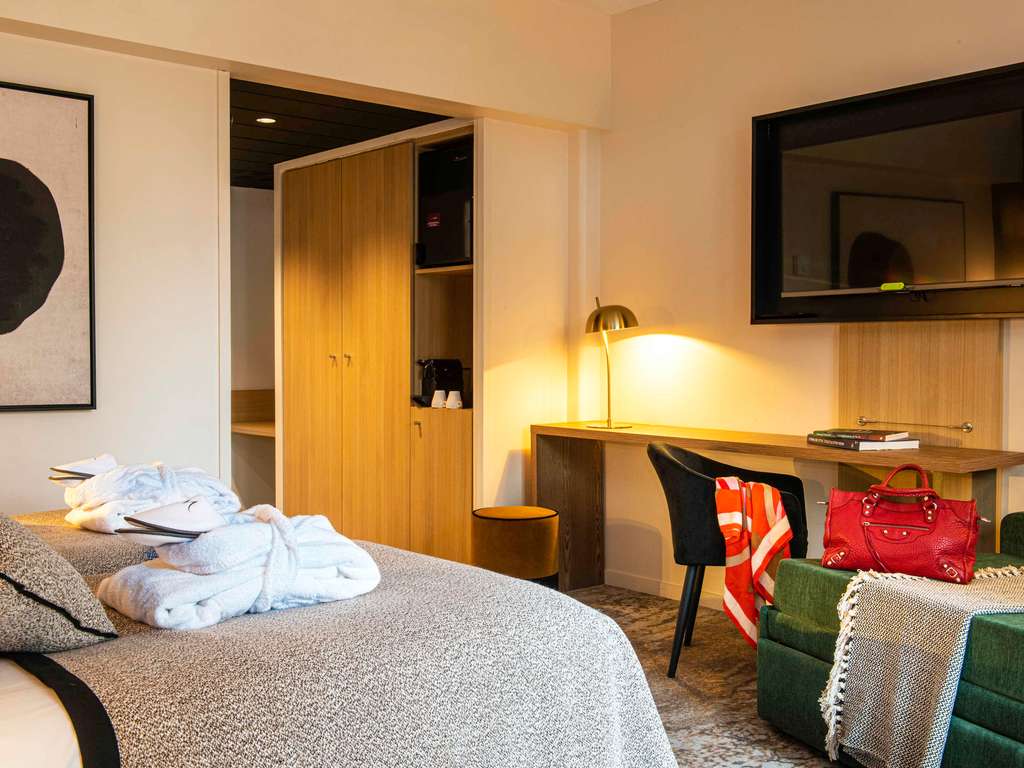
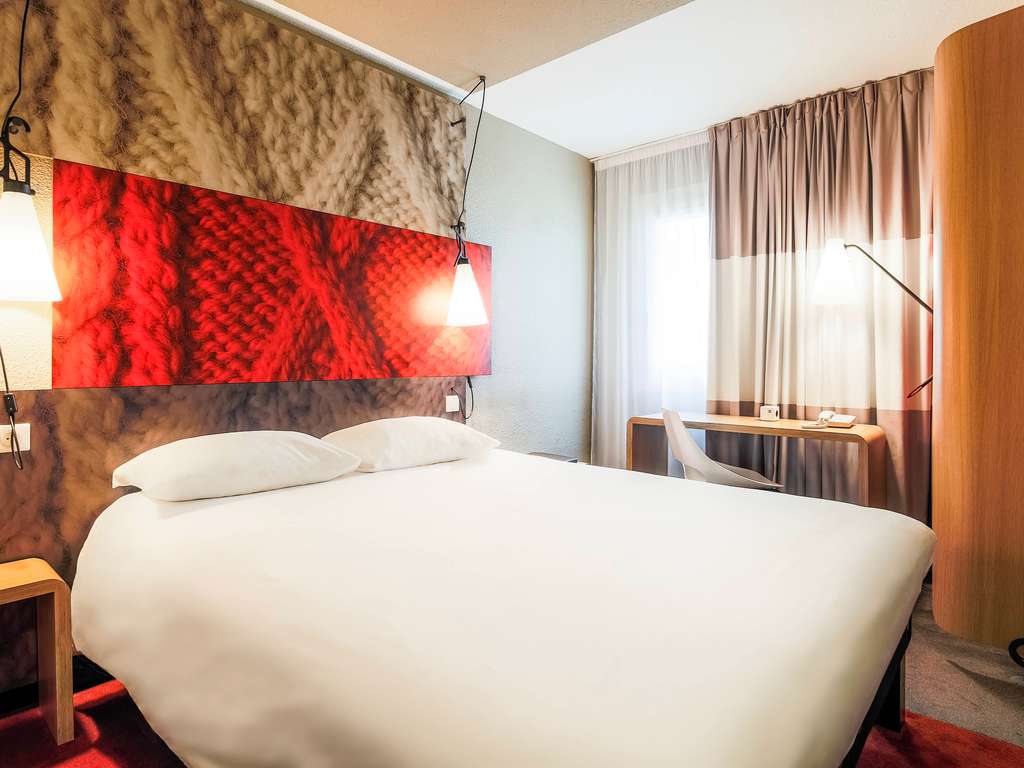
Best hotels in Carcassonne

Frequently asked questions

Is Carcassonne worth visiting?

Yes, particularly if you understand what it is. The 19th-century restoration gave the fortress its remarkable visual coherence, which is exactly why it feels so complete today. Visit early or stay overnight to experience it beyond peak hours, and balance your time between the medieval Cité and the lived-in Bastide below.

How many days do you need in Carcassonne?

One full day is enough to explore the Cité thoroughly, including the ramparts and the Château Comtal. Two days allow space for the Bastide Saint-Louis, the Canal du Midi, and possibly a short regional excursion. Carcassonne works equally well as a stop or as a base.

Is Carcassonne expensive?

Staying inside the medieval walls commands a premium, largely for atmosphere and location. In the lower town, accommodation and dining are more moderately priced. Compared with major French cities, overall costs are manageable, and good-value options are easy to find once you step slightly away from the main tourist lanes.

Is Carcassonne safe?

Yes. It is a small, tourism-oriented city with low crime levels. Basic awareness in busy areas during the high season is sufficient.

Do you need to speak French in Carcassonne?

No, though it helps. English is widely spoken in hotels, restaurants, and visitor-facing businesses. Beginning interactions with a simple “Bonjour” sets the tone correctly and is appreciated. Even minimal effort is noticed positively.

Is Carcassonne a board game?

The popular tile-based board game Carcassonne takes its name and visual inspiration from the fortified city, particularly the idea of walls, fields, and medieval expansion. While the game simplifies the landscape into abstract tiles, visiting the real Carcassonne makes the connection immediately clear.

Top destinations