Rouen

A Gothic masterpiece on the Seine where medieval timber, the legacy of a martyr, and the shifting light of the Impressionists define the spirit of Normandy.

  • Rouen

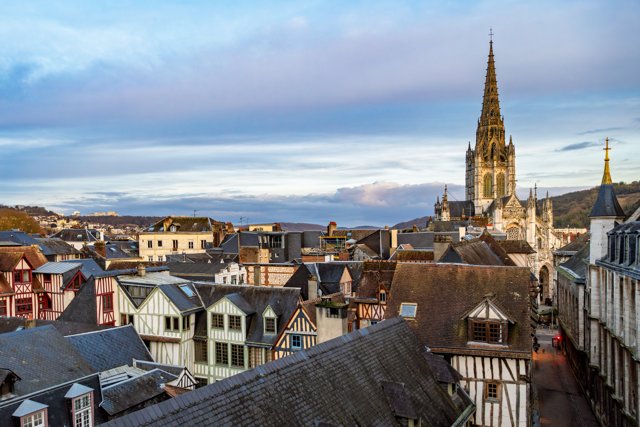
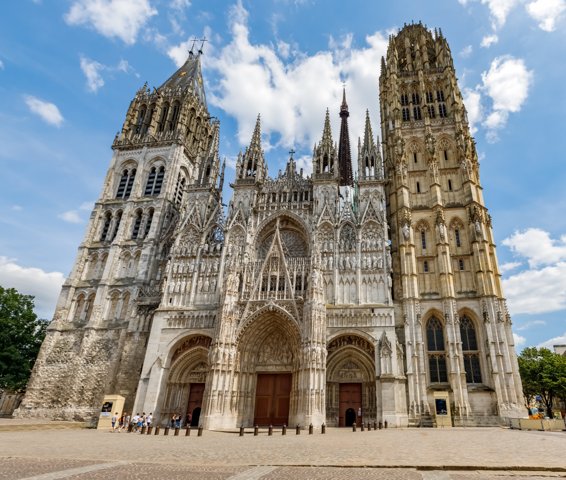
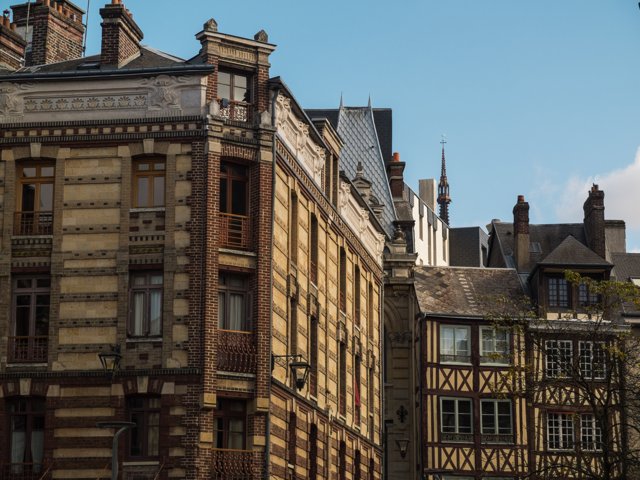
    Tucked into a bend in the Seine, Rouen is a city shaped by centuries of history. From Roman origins to Viking raids and medieval prosperity, traces of its past appear around every corner. Rising above it all, the intricate façade of Rouen Cathedral still dominates the skyline, much as it did when Claude Monet returned repeatedly to paint it in shifting light.

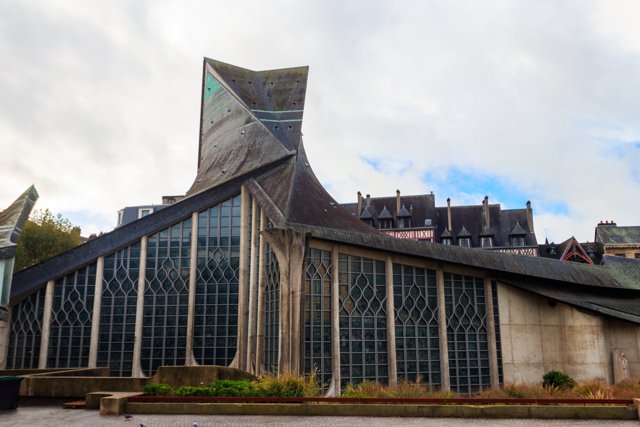
    Rouen’s story is inseparable from that of Joan of Arc, who was tried and burned at the stake here in 1431. The square where it happened remains one of the city’s most poignant places, now watched over by a modern church dedicated to her memory. Today Rouen is anything but a relic, standing as a lively centre of artisans, students, and gastronomy.

    From historic inns like La Couronne to the riverbanks that inspired the Impressionists, Rouen offers a journey through the cultural soul of Normandy.
Unique experiences in Rouen

Plan your trip

Entry Requirements & Travel Documents

France is part of the Schengen Area. Therefore, EU and EEA citizens can enter the country with a valid passport or national ID card. Many non-EU travellers from visa-exempt countries may stay up to 90 days within a 180-day period without a visa, subject to passport validity requirements that vary by nationality.

From late 2026, travellers from many visa-exempt countries, including the United Kingdom, United States, Canada, Brazil, Japan, and Australia, will need to apply online for ETIAS (European Travel Information and Authorisation System) before travelling to France and other Schengen countries for short stays. Until ETIAS becomes operational, passport-only entry remains in place.

Be sure to always verify entry requirements with official government sources before departure, as conditions may change.

Money, Currency & Paying in Rouen

The local currency is the euro (€ / EUR). Credit and debit cards are widely accepted across Rouen — from restaurants and cafés to museums, boutiques, and public transport machines.

Contactless payments are standard, and mobile wallets are commonly used. That said, it is still worth carrying a small amount of cash for open-air markets, bakeries, or smaller neighbourhood shops.

ATMs are plentiful throughout the city, and withdrawing euros locally often offers better exchange rates than airport currency desks.

Weather, Seasons & When to Visit

Rouen shares Normandy’s temperate maritime climate, influenced by the nearby English Channel. Seasons are well defined but rarely extreme, with late spring and early autumn often offering the most pleasant balance of weather and atmosphere.

Spring brings blooming parks and long evenings that invite unhurried strolls through the medieval centre. Summer is lively and comfortably warm, with temperatures typically ranging between 22°C and 25°C. After dark, the façade of Rouen Cathedral becomes the stage for the spectacular Cathedral of Light projection show.

Autumn paints the surrounding Norman countryside in rich shades of gold and amber. It is also the season when the soft gray-blue skies once described by author Victor Hugo lend the city an especially dramatic atmosphere.

Winter reveals a quieter side of the city, with cool mist rising from the Seine and half-timbered streets glowing softly in the evening light.

Health Insurance

UK and EU visitors should carry a valid GHIC (Global Health Insurance Card) or EHIC (European Health Insurance Card), which provides access to medically necessary treatment within France’s public healthcare system. However, this does not replace full travel insurance, which is strongly recommended.

Non-EU travellers should arrange comprehensive medical insurance before arrival, as hospitals and clinics may request payment or proof of coverage for non-emergency care.

Pharmacies are widely available throughout Rouen and are easily recognised by a green illuminated cross sign.

In an emergency, dial 112, the universal emergency number across the European Union.

Connectivity, Roaming & Mobile Data

In Rouen, free Wi-Fi is common in most cafés, hotels, and public spaces. 

If your mobile plan is from an EU/EEA provider, roaming in France is generally included at domestic rates under EU “Roam Like at Home” rules, subject to fair-use limits. If your provider is outside the EU/EEA, roaming charges may apply, so check before departure. 

Visitors from outside the EU may find it more economical to purchase a prepaid SIM card or eSIM. Major French mobile operators such as Orange and SFR offer prepaid data packages that can be purchased at airports, local tabacs, and mobile phone shops across the city.

Airport & Main Arrival Hubs

Rouen has a small regional airport, Rouen Vallée de Seine Airport (URO), located about 10 km east of the city. However, it handles mostly charter and limited regional flights, so most international travellers arrive via larger nearby airports.

The most convenient gateway is Paris Charles de Gaulle (CDG), France’s main international hub. Located roughly 130 km from Rouen, it offers direct flights from cities across Europe, North America, Asia, and the Middle East.

Another option is Paris Orly Airport (ORY), which handles a large number of European and domestic flights. From either Paris airport, Rouen can be reached comfortably by train, rental car, or organised transfer.

Main Train Stations

Rouen’s principal railway hub is Gare de Rouen-Rive-Droite, located just north of the historic centre. Direct trains run frequently from Gare Saint-Lazare in Paris, with journeys typically taking 1 hour 15 minutes to 1 hour 30 minutes. These services are operated by SNCF, France’s national railway company.

The station itself sits on a hill above the old town, but reaching the historic centre is easy thanks to local buses, taxis, or a short downhill walk.

From the Airport / Station to the City Centre

If arriving by train at Rouen-Rive-Droite, the historic centre is only about 15 minutes away. Many travellers simply walk downhill toward the cathedral and the Seine, though taxis and city buses are readily available outside the station.

From Paris Charles de Gaulle Airport, the most straightforward route is usually to take a train or airport shuttle into central Paris and then continue from Gare Saint-Lazare to Rouen by train.

Travellers landing at Paris Orly Airport can reach Paris by airport rail links or shuttle buses before continuing the same route toward Rouen.

Driving is another convenient option. The journey from Paris typically takes around 1.5 hours, depending on traffic.

Taxis & Ride-Hailing Services

Taxis are widely available in Rouen, particularly at train stations, major squares, and near popular hotels. Ride-hailing services such as Uber and Bolt also operate in the city and offer a convenient alternative for quick trips across town.

Fares are generally reasonable, and the historic centre is compact enough that many journeys are short.

Arrival Tips & Common Mistakes to Avoid

  • If travelling from Paris by train, remember that all Rouen trains depart from Gare Saint-Lazare, not from the city’s larger international stations such as Gare du Nord. Planning this connection in advance saves time on travel day.
  • If you are travelling from Paris on a weekday, avoid the 5 pm to 7 pm window. These trains are packed with commuters heading home to Normandy, and finding luggage space can be a challenge.
  • If you are arriving by car, note that the historic centre is largely pedestrianised, with limited vehicle access. It is often easiest to park in one of the city’s public car parks just outside the old town and continue on foot.
  • If you aren't using a contactless card for the bus or tram, remember to validate your paper ticket in the yellow or grey machines immediately upon boarding.

Public Transport & Zones

Rouen’s public transport network is efficient, easy to navigate, and surprisingly robust for a city of its size. The system is operated by Réseau Astuce and connects the city centre with surrounding neighbourhoods and nearby towns across the Rouen metropolitan area.

The network includes tram lines, known locally as the Métro, along with a comprehensive Bus Rapid Transit line (TEOR). The tram runs frequently through key areas of the city and is particularly useful for reaching neighbourhoods on both sides of the Seine.

The historic centre itself is largely pedestrianised, meaning most travellers will only need public transport for longer distances or for reaching areas outside the old town.

Rouen’s network uses a simple fare system that applies across trams and buses, making transfers between modes straightforward.

Tickets & Passes

Tickets for Rouen’s public transport can be purchased from tram stations, ticket machines, and via the official mobile app from Réseau Astuce.

Single tickets allow transfers between buses and trams within a limited time window. Visitors staying for a few days may find that day passes or multi-trip tickets offer better value.

As with most French transport systems, remember to validate your ticket when boarding or entering the platform, even if you purchased it in advance.

Walking & Cycling

Rouen is a wonderfully walkable city, particularly within its medieval centre, one of the largest pedestrian zones in France.

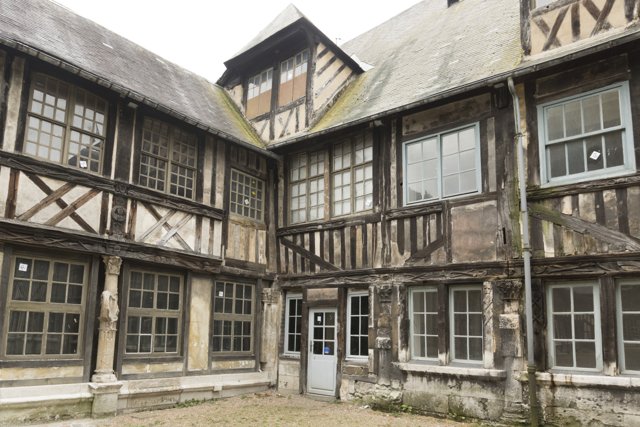
Strolling through the old town is often the most rewarding way to experience Rouen. Narrow cobbled streets reveal half-timbered houses, small cafés, artisan shops, and quiet courtyards that rarely appear on maps.

Cycling is also becoming increasingly popular. The city has been expanding its network of bike lanes, and several bike-sharing and rental options are available. Flat paths along the Seine offer especially pleasant cycling routes and scenic views of the riverbanks. Rouen’s bike-share scheme features hundreds of mechanical and electric bikes. You can unlock them via the Lovélo app.

Nearby Destinations / Day Trips

Rouen’s location makes it an excellent base for exploring Normandy and northern France.

The dramatic chalk cliffs of Étretat are one of the region’s most iconic landscapes and can be reached in roughly 90 minutes. The historic port city of Honfleur, famous for its postcard-perfect harbour and artistic heritage, also makes for a rewarding excursion.

History enthusiasts often continue further along the coast to the beaches associated with D‑Day Landings during the Second World War.

Closer to Rouen lies the holy grail for art lovers, the charming town of Giverny, home to the house and gardens of Claude Monet.

Accessibility & Basic Safety Tips

Rouen is generally a safe and welcoming city, and visitors typically find it comfortable to explore both day and night.

As in any popular destination, it is wise to remain aware of your surroundings in busy areas such as train stations, markets, and crowded streets. Simple precautions, such as keeping personal belongings secure and avoiding poorly lit areas late at night, are usually all that is needed.

The historic centre’s medieval layout means some streets are cobbled and uneven, which can occasionally present challenges for travellers with reduced mobility. However, many major attractions, museums, and public transport services have improved accessibility in recent years.

Language, Culture & Local Etiquette

French is the everyday language in Rouen, and while many people working in tourism, hotels, and restaurants speak English, making a small effort in French is always appreciated. A simple “Bonjour” (or “Bonsoir” in the evening) when entering a shop or café goes a long way and is considered basic courtesy.

Rouennais tend to have a classic Norman reserve. They are not naturally boisterous, but their quiet exterior hides a deep, sincere warmth. Once the initial "ice" is broken over a coffee or a shared interest in the city's history, you’ll find them to be passionate, proud, and fiercely welcoming storytellers.

As in most of France, tipping is modest: service is typically included in the bill, though rounding up or leaving a small extra amount for excellent service is always appreciated.

Neighbourhoods

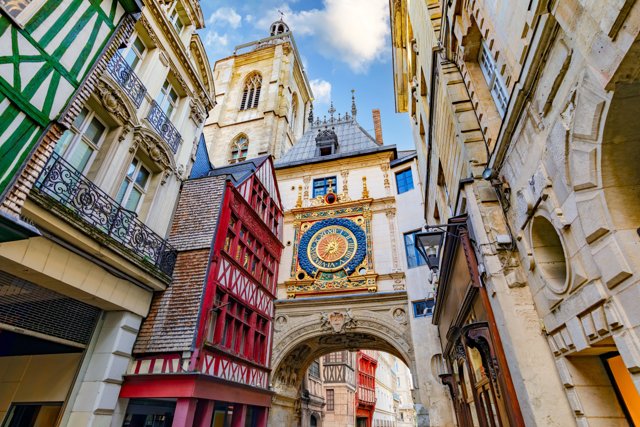
  • The Vieux‑Rouen (Old Town) is where most visitors begin. This is the postcard version of the city: narrow cobbled lanes, medieval half-timbered houses leaning at improbable angles, and lively squares framed by cafés and small boutiques. Landmarks such as Rouen Cathedral and the iconic clock arch of the Gros Horloge anchor the district. 
  • To the east, the Saint-Maclou and Martainville district offers one of Rouen’s most atmospheric corners. Centuries-old houses cluster around the Church of Saint‑Maclou, while antique dealers, art galleries, and artisan workshops line its winding streets.
  • Closer to the Seine, the riverfront quays have evolved into lively public spaces where locals gather to walk, cycle, or enjoy a drink overlooking the water.
  • Across the river, the Saint-Sever district on the Left Bank (Rive Gauche) presents a more contemporary side of Rouen. Once an industrial area, it has gradually transformed into a vibrant residential and leisure hub, where riverside promenades, markets, and seasonal events bring the community together along the banks of the Seine.

Gastronomy

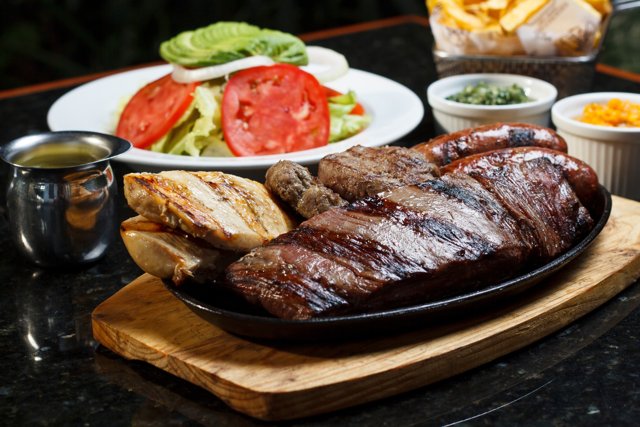
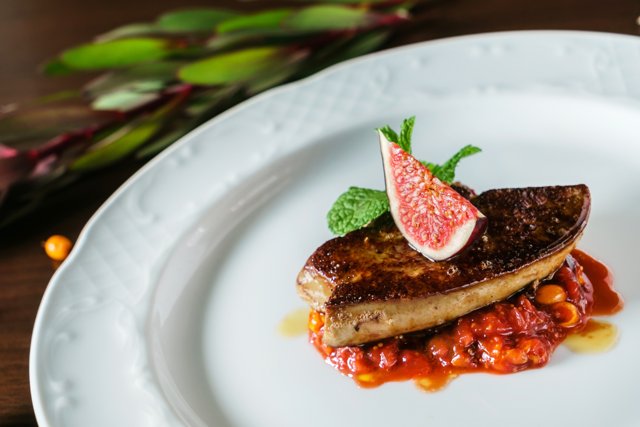
Food is central to life in Rouen, reflecting the rich culinary traditions of Normandy — a region known for butter, cream, apples, and exceptional dairy products. In 2021, Rouen became the first French city named a UNESCO City of Gastronomy, recognising both its historic food culture and its thriving contemporary scene.

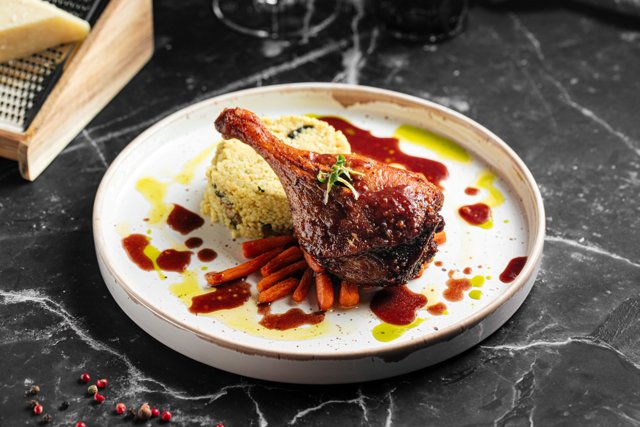
One of the region’s signature dishes is Canard à la Rouennaise, a traditional pressed duck prepared with a rich sauce of wine, duck liver, and shallots.

Normandy’s famous cheeses — Camembert, Pont-l’Évêque, Livarot, and Neufchâtel — appear on menus across the city, often paired with local cider. Apples are equally central to the regional palate, appearing in sparkling cidre, sweet pomme au aperitifs, and the powerful apple brandy Calvados, sometimes served mid-meal as the traditional trou normand.

Rouen also offers a small repertoire of local sweets, including Larmes de Jeanne d’Arc, chocolate-coated roasted almonds, as well as Macarons de Rouen and delicate Mirlitons de Rouen.

City Rhythm

Rouen’s pulse is dictated by its 45,000 students and its deep connection to the Seine. During the week, the city is a flurry of academic activity, with the "Zazimuts" student festivals bringing concerts and street art to every corner.

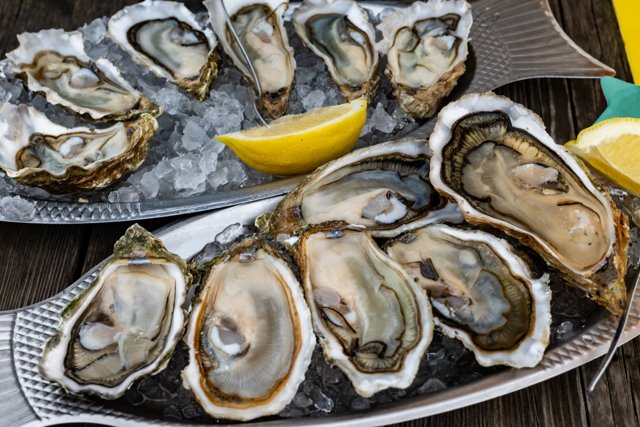
On the weekends, the rhythm shifts to the markets. Sunday mornings at the Marché Saint-Marc are a sensory overload of local cheeses, fresh oysters, and roasted chickens. In the evenings, the "City of a Hundred Bars" comes alive, as locals gather in the timbered pubs of the Old Town to trade wine for a crisp glass of local cider.

Things to Do

Rouen offers a rich mix of history, art, and everyday pleasures. A visit often begins at Rouen Cathedral, whose elaborate Gothic façade famously inspired dozens of paintings by Claude Monet.

Nearby, the medieval clock tower known as Gros Horloge spans a narrow street and remains one of the city’s most recognisable landmarks.

History enthusiasts will want to visit Place du Vieux-Marché, where Joan of Arc was executed in 1431 and where a modern church now stands in her memory.

Rouen also boasts excellent museums, including the renowned Musée des Beaux-Arts de Rouen, home to works by masters such as Caravaggio, Rubens, and Monet.

Beyond its landmarks, some of the city’s greatest pleasures are simple ones: wandering medieval streets, browsing local markets, enjoying a long Norman lunch, or watching the light shift across the Seine, the same light that once captivated generations of artists.

Best hotels in Rouen

Frequently asked questions

Is Rouen worth visiting?

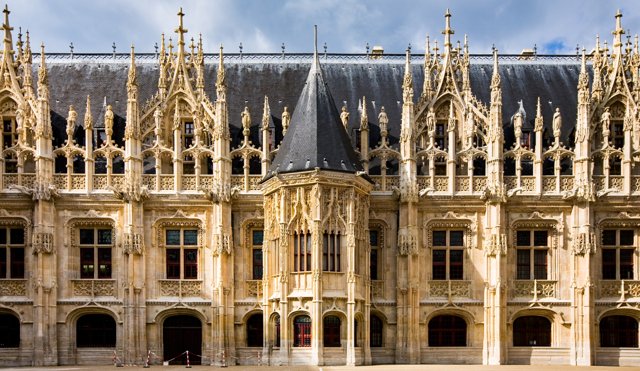
Absolutely. Often described as the historic heart of Normandy, Rouen combines a remarkably preserved medieval centre with a strong cultural and culinary scene. Half-timbered houses, Gothic churches, and the artistic legacy of Claude Monet give the city a character that feels both historic and creative.

How much time should I spend in Rouen?

One to two days is usually enough to explore Rouen’s historic centre, cathedral district, and museums at a comfortable pace. Many travellers also stay longer and use the city as a base for visiting nearby highlights such as Giverny or the cliffs of Étretat.

Is Rouen expensive?

Rouen is relatively affordable compared with many French cities. Many of its best experiences — wandering the medieval streets, exploring churches, or watching the Cathedral light show — are free.

Can Rouen be visited as a day trip from Paris?

Yes. Rouen is about 1 hour 15 minutes by train from Paris, with frequent departures from Gare Saint-Lazare. Many travellers visit for the day to explore the cathedral, medieval streets, and markets before returning to Paris in the evening.

Is Rouen easy to explore on foot?

Yes. Much of Rouen’s historic centre is pedestrianised, making it ideal for exploring at a relaxed pace. Major landmarks such as Rouen Cathedral and the Gros Horloge are within easy walking distance of one another.

Top destinations