Athens

A chaotic, romantic city where ancient history and contemporary life share the same sun-bleached streets.

  • Athens

    Athens was where Western civilisation, democracy, and philosophy took shape — ideas that still underpin much of the modern world. The Acropolis and the Parthenon, nearly 2,500 years old, rise above a city that has been continuously inhabited for longer than almost anywhere else in Europe.

    At street level, Athens feels very much alive. Street art colours entire building facades, neighbourhood cafés fill from mid-morning onwards, and a lively food scene rewards those willing to explore beyond the tourist trail. Locals are open, passionate, and quick to strike up conversation.

    Many travellers pass through on their way to the Greek islands. Those who linger, however, discover a city that has quietly reinvented itself — an open-air museum that continues to evolve at its own unhurried pace.
Unique experiences in Athens

Plan your trip

Entry Requirements & Travel Documents

Greece is part of the Schengen Area. EU and EEA citizens can enter with a valid passport or national ID card. Travellers from many visa-exempt countries can stay for up to 90 days within any 180-day period without a visa. Your passport must be valid for at least three months beyond your intended departure date from Greece, and issued within the last ten years.

From late 2026, visitors from many visa-exempt countries will need to obtain ETIAS authorisation before travelling to Greece and other Schengen states for short stays. Until the system is in place, current entry rules remain unchanged. Always check official government guidance before departure.

Money, Currency & Paying in Athens

The local currency is the euro (€). Athens is very card-friendly, with Visa and Mastercard accepted universally. Carrying some cash is still useful for smaller purchases, tips, buying from street vendors, and for the occasional establishment where the card machine is out of service.

Currency exchange offices require an ID to process transactions, and they generally give you a worse exchange rate than an ATM withdrawal. 

When a card terminal offers to charge you in your home currency, always choose to pay in euros instead.

Weather, Seasons & When to Visit

Athens has a Mediterranean climate, with hot, dry summers and mild winters. 

The best times to visit are spring and autumn. April, May, September, and October offer comfortable temperatures, manageable crowds, and lower accommodation prices. Greek Orthodox Easter, which falls between April and May, is worth experiencing, but book accommodation well in advance as the whole country celebrates.

Summer (June to August) is intense. Temperatures are high, crowds are at their peak, and prices follow. The reward is a packed festival calendar, buzzing beach clubs, and long warm evenings. August is quieter, as Athenians head to the islands.

Winter (effectively November to March) brings cooler temperatures and occasional rain, but also lower prices and a lively local nightlife. Carnival in February and Christmas festivities in December add colour to the quieter months.

Health Insurance

EU visitors should carry a valid European Health Insurance Card (EHIC) or Global Health Insurance Card (GHIC), which gives access to public healthcare in Greece under the same conditions as local residents. This does not replace comprehensive travel insurance, which remains strongly recommended for all visitors.

Travellers from outside the EU are advised to have travel medical insurance covering treatment, hospitalisation, and emergency repatriation. Proof of insurance may be required for certain visa categories.

Pharmacies (Farmakeia) are widely available across the city and are a good first port of call for minor ailments or medical advice.

Connectivity, Roaming & Mobile Data

Free Wi-Fi is widely available in hotels, cafés, metro stations, and many public squares across the city.

Travellers with mobile plans from EU or EEA providers can generally use their data, calls, and texts in Greece at domestic rates under the EU "Roam Like at Home" rules. Visitors from outside the EU should check roaming costs with their provider before departure.

For longer stays, consider getting a local prepaid SIM card or eSIM. Buying a physical SIM card requires registration with an ID, and this process tends to go more smoothly in larger branded stores of providers like Cosmote, Vodafone, and Nova.

Airports & Main Arrival Hubs

Athens International Airport "Eleftherios Venizelos" (ATH) connects the city to more than 130 destinations worldwide and serves as a hub for flights to Greek islands and mainland destinations.

Travellers arriving from Italy or the Greek islands by ferry will dock at one of three ports. Piraeus, the largest and closest to the city centre, handles most major routes from Crete, the Cyclades, and the Dodecanese, as well as international ferries. Rafina, closer to the airport, is popular for Cyclades connections. Lavrio, further south, serves a smaller number of island routes.

Intercity buses (KTEL) operate from two terminals: Kifissos for the Peloponnese, western and southern Greece, and Liosion for central and northern Greece.

Main Train Stations

Larissis Station, also known as Larissa Station, is the main railway hub, served by OSE, the Greek national railway. Key routes connect Athens with Thessaloniki, Patra, Kalambaka (the gateway to Meteora), and Alexandroupoli.

Trains are affordable and scenic, particularly on the Athens to Thessaloniki line, but the rail network is limited compared to other European countries. For travel around Greece, intercity buses (KTEL) remain the more practical choice, with a far wider reach across the country.

From the Airport to Central Athens

Metro Line 3 is the fastest way into the city, running directly to Syntagma Square in around 40 minutes. Services operate from early morning until late evening. For arrivals outside those hours, express buses run around the clock to the city centre and Piraeus port, making them the practical option for late-night or early-morning arrivals.

The suburban railway is another alternative, connecting the airport to Larissis Station with a metro transfer along the way.

Google Maps and Moovit are useful for planning the best route to your accommodation based on your destination and time of arrival.

Taxis & Ride-Hailing

Licensed taxis in Athens are yellow and easy to spot. All operate on a metre, so make sure it's running from the moment you set off. From the airport, a flat rate applies to the city centre, with a higher tariff for arrivals between midnight and 5am. All licensed taxis are required to accept card payments, though confirming with the driver beforehand is sensible.

Both Uber and Free Now operate in Athens, connecting you with licensed yellow taxis through their apps. Uber runs as UberTaxi rather than private hire, meaning a regular metered taxi arrives, with the convenience of app-based booking and payment.

Arrival Tips & Common Mistakes to Avoid

  • Trying to cover the Acropolis, the key museums, the best restaurants, and a beach in a single weekend is unrealistic. Take your time.
  • Avoid visiting around 15 August, Greece's biggest national holiday. Most locals leave for the islands, and many of the best bars and restaurants are closed.
  • Make sure the taxi metre is switched on the moment you set off. Airport transfers to the city centre are a flat fare, but all other journeys should be metered.
  • Pack sunscreen and use it generously. From April to October, the sun is stronger than it looks, even on overcast days.
  • Bring a more modest wardrobe for religious sites. Bare shoulders and short hemlines are not permitted in churches and monasteries.

Public Transport & Zones

Athens has an affordable and reliable public transport network covering most of the city and suburbs, including the Port of Piraeus, managed by the Athens Urban Transport Organisation (OASA). The metro is the fastest way to get around, with three lines connecting the main central districts. Buses and trolleybuses extend coverage across the wider city, while the tram links the centre with the coastal suburbs.

A single ticket covers all modes of transport and is valid for 90 minutes, making transfers between metro, bus, and tram straightforward. Note that travel to and from the airport requires a separate ticket.

Walking & Cycling

Athens is very walkable, and the central districts are closer together than they might appear on a map. The main sights, museums, and neighbourhoods are concentrated enough that you can cross from Kolonaki to the western edge of the centre in under half an hour on foot. In practice, the walk tends to take much longer, since each neighbourhood along the way demands its own detour.

Cycling infrastructure is still developing, and summer heat makes riding across the city impractical for most visitors. The exception is the pedestrianised circuit around the Acropolis, passing through Plaka, Monastiraki, Thissio, and Koukaki — one of the most scenic urban rides in Europe, and a genuinely enjoyable way to take in the city. Guided cycling tours are the most practical way to experience it.

Nearby Destinations / Day Trips

Athens is an excellent base for day trips. The closest escape is the island of Aegina, reachable by hydrofoil in under an hour, with ancient ruins, sandy beaches, and pistachios that locals take very seriously. Further out in the Saronic Gulf, car-free Hydra offers stone mansions, harbour cats, and donkeys doing the heavy lifting, with no motorised vehicles in sight.

On the mainland, Nafplio is a beautiful former capital with Venetian architecture and a hilltop fortress, and one of the most charming towns in the country. Further afield, Delphi is worth every minute of the three-hour journey, combining dramatic mountain scenery with one of antiquity's most atmospheric ancient sites. For something closer, Cape Sounion's clifftop Temple of Poseidon is particularly scenic at sunset.

The vineyards of the Mesogaia valley, just outside the city, have been quietly producing some of Greece's most exciting labels. The Greek wine renaissance of the past three decades is well worth exploring, and several wineries welcome visitors.

Accessibility & Basic Safety Tips

Athens is safer than its gritty appearance might suggest, and comfortable for solo travellers. The streets are busy around the clock, which itself contributes to a general sense of security. The area around Omonia is worth approaching with a little more caution after dark.

Traffic is the more immediate concern for visitors. Pedestrian crossings are treated as suggestions by some drivers, and motorcycles on pavements are not unheard of. Stay alert, particularly at junctions.

As in any large city, keep an eye on your belongings on public transport and avoid leaving your phone unattended on café tables. Use licensed taxis and well-lit ATMs.

The European emergency number 112 operates across Greece. For tourist-specific assistance, the Tourist Police can be reached at 1571 in English, French, and German.

Tickets & Passes

Single tickets and travel cards are available at metro and tram stations. For occasional journeys, the contactless Tap2Ride system lets you pay directly at validators with a Visa or Mastercard, including Apple Pay and Google Pay, with a daily fare cap automatically applied.

For longer stays, multi-day passes offer good value. A 3-day tourist ticket includes airport transfers and unlimited travel, making it a practical option for most visitors.

Language, Culture & Local Etiquette

Greek is the official language, but English is widely spoken across the city. In hotels, restaurants, and shops, communication is rarely an issue. A few words are still worth knowing: yia sas (hello or goodbye, in formal company) and efharisto (thank you) are always well received.

Athenians are expressive and warm by nature. Loud voices and animated gestures are simply part of everyday conversation, not a sign of conflict. Ask a stranger for directions and you may end up in a ten-minute chat, or even invited for coffee.

Tipping is customary. In cafés and restaurants, 10–15% is the norm. For taxis, rounding up the fare is standard.

Neighbourhoods

  • Plaka & Anafiotika: The most visited part of the old city, with pedestrian cobbled streets climbing toward the Acropolis. Touristy along the main drag, but genuinely charming if you wander uphill into Anafiotika's whitewashed alleys. People actually live here, so keep the noise down.
  • Makrygianni & Koukaki: Just south of the Acropolis Museum, these two adjoining neighbourhoods offer a relaxed, local feel without sacrificing convenience. A strong choice for first-time visitors.
  • Monastiraki & Psyrri: Monastiraki is the city's liveliest crossroads, flanked by ancient ruins, market stalls, and packed café terraces. Psyrri, just north, has a younger, bar-heavy energy.
  • Syntagma & the Commercial Triangle: The civic and commercial heart of Athens, anchored by the parliament building. Good transport connections and plenty of dining and nightlife options, especially around Kolokotroni.
  • Kolonaki: The city's most upscale central neighbourhood, with excellent museums, quiet streets, and some of the best hotels near the centre.
  • Exarcheia: Gritty, politically charged, and unmistakably local. Worth a visit, but probably not the right base for a first trip.

Gastronomy

Greek cuisine is built on olive oil, seasonal vegetables, legumes, and fresh seafood, with meat — lamb, pork, and chicken — playing a supporting role rather than dominating the plate. Simplicity and quality of ingredients do the heavy lifting.

Street food is the natural starting point: souvlaki, gyros, spanakopita, and honey-drenched loukoumades are everywhere and rarely disappoint. Sit down in a taverna and the focus shifts to moussaka, slow-cooked meats, and mezzes. The small shared plates like tzatziki, fava, and grilled octopus are designed to accompany conversation and wine.

Greek wines are underrated internationally, but worth exploring. Artisanal passito-style wines, made from sun-dried grapes, stand out for their quality and character. Coffee culture is equally serious: the freddo espresso (a shot of espresso shaken with ice) is the drink of choice for navigating Athens in summer heat.

City Rhythm

Athens can feel overwhelming at first: the traffic, the noise, the apparent disorder. Let yourself relax into the flow of local life rather than resist it, and a different pace reveals itself — one built around coffee, conversation, and long meals that nobody seems in a hurry to finish.

Mornings begin slowly, often at a neighbourhood bakery or café. Some shops still close in the early afternoon for mesimeri (the traditional midday rest), though businesses in the tourism and service sectors tend to keep longer hours. Afternoons are for lingering. Life here is largely lived outdoors, at café tables and taverna terraces.

Dinner starts late. Locals rarely sit down before 9pm, and kitchens stay open well past midnight. Book a table for that window, or arrive before 8pm to walk in without a reservation.

Things to Do

Most visits begin at the Acropolis, and for good reason. The site and its surrounding archaeological layers — the Roman Agora, Hadrian's Library, the Theatre of Dionysus — can easily fill a full day. Arrive before 11am to avoid strong sun and big crowds.

Beyond ancient history, Athens has a strong and underrated contemporary art scene. The Basil & Elise Goulandris Foundation is among the finest modern art museums in southeastern Europe, and well worth the detour.

For a grounding slice of everyday Athenian life, the Varvakios Central Municipal Market is vivid, noisy, and entirely authentic. On Saturdays, the Kallidromiou Street Farmers' Market in Exarcheia draws locals rather than tourists, with fresh produce and a neighbourhood atmosphere that is hard to find elsewhere.

Save an evening for one of the city's hills. Philopappos and the Hill of the Nymphs offer panoramic views over the city with noticeably fewer crowds than better-known viewpoints.

Best hotels in Athens

Frequently asked questions

Is Athens safe?

Athens is considerably safer than its gritty appearance might suggest. As in any large city, keeping an eye on belongings in crowded areas and on public transport is sensible. Solo travellers, including women travelling alone, generally find the city very comfortable.

How many days do you need in Athens?

Three to four days cover the main sites and give you a feel for the city. A longer stay opens up day trips and the slower rhythm that makes the city genuinely enjoyable.

Is Athens a good base for visiting the Greek islands?

Yes. Piraeus, the main ferry port, connects directly to the city centre by metro, with frequent services to the Cyclades, Dodecanese, Crete, and the Saronic Gulf islands.

Do I need to book the Acropolis in advance?

Yes, particularly between April and October when visitor numbers are capped and entry is timed. Note that the Acropolis ticket and the Acropolis Museum ticket are sold separately.

Is Athens expensive?

Athens is one of the more affordable capitals in Europe. Street food, neighbourhood tavernas, and public transport represent good value. Accommodation ranges from budget guesthouses to upscale boutique hotels.

When are museums and sights free to visit?

State-run sites, including the Acropolis, offer free entry on several national dates and on the first and third Sunday of each month between November and March. Always check individual museum websites for their own free days.

Is Athens good for families?

Yes. Archaeological sites, open squares, parks, and easy access to the coast make it a manageable and rewarding destination for families. The food scene is relaxed and portions are generous.

Is tap water safe to drink?

Yes. Tap water in Athens is safe and widely praised for its flavour. There is no need to buy bottled water.

Is there a beach in Athens?

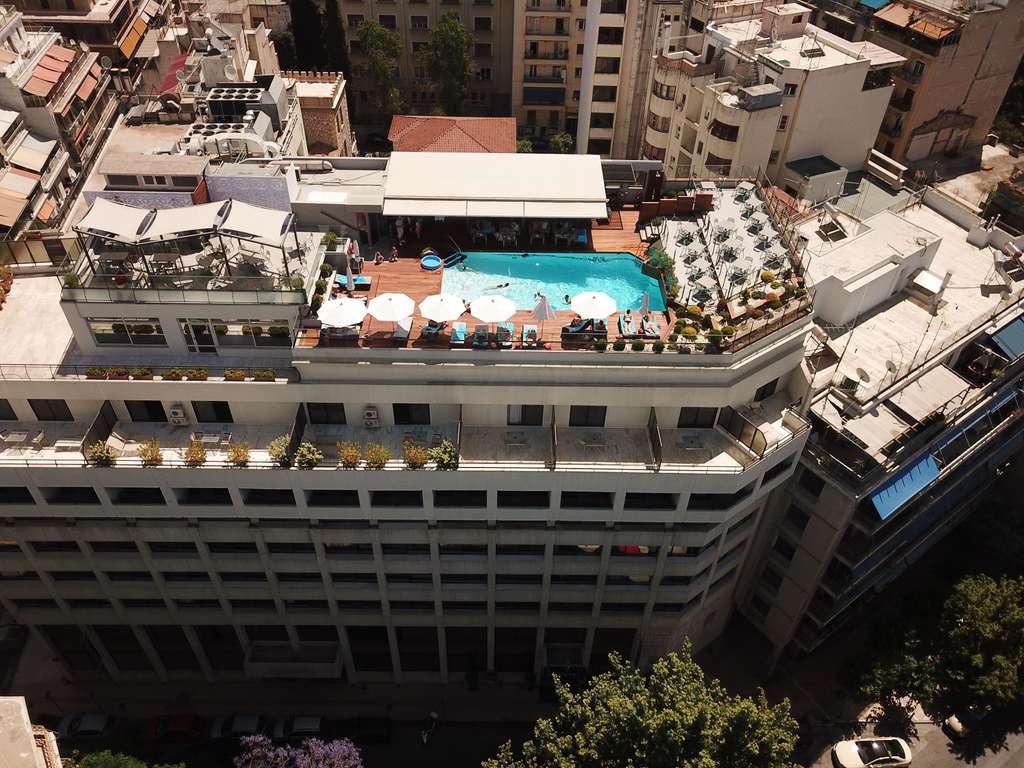
Not in the city centre itself, but several beaches are within an hour's journey by public transport from Syntagma Square. The coastal tram is the easiest way to reach the nearest options along the southern coastline. To cool down in the city itself, find one of the rooftop pools.

Top destinations